SOV by AI Model
Understand how your visibility differs across AI models.
Why break down by model?
Not every AI model treats your brand the same way. Different models have different training data, are updated at different times, and use different methods to incorporate information from the web. As a result, your Share of Voice on one model can be significantly higher or lower than on another.
The SOV by AI Model view breaks down your Share of Voice per model, allowing you to analyze and optimize with precision.
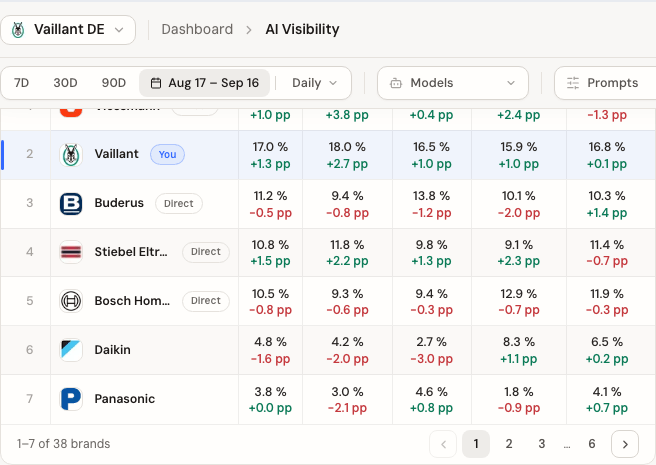
The AI models at a glance
Compare the same prompts, markets and dates for each model. Answers from a chat interface and an API may differ, as may web access and available sources. The current selection is shown in the model filter. A missing value does not mean 0% visibility: first check whether answers exist for that model and period.
Model selection now lives in the top bar. On the Share of Voice page, open the All models filter to narrow the current view to specific models. This is an analysis filter: historical data remains intact and is filtered only for the current view.
Reading the table
The SOV by Model table shows a separate row for each active AI model. For each model, you can see:
- Your SOV share — The percentage of your brand's mentions on this model
- Competitor shares — How the selected competitors are distributed
- Total mentions — The absolute number of mentions per model
If your SOV on one model is significantly lower than on others, that is a strong signal for targeted optimization. Different models favor different content formats and source types.
How to use this metric
Identify the model where you have the highest SOV. Analyze which of your content performs particularly well there — these insights can often be transferred to other models.
Which model has your lowest SOV? Check which competitors lead there, and use the prompt and heatmap views on Share of Voice to understand their mention patterns.
Compare the sources actually cited and the answer patterns. Base changes on this evidence and assess them in further measurements using the same prompts.
Model updates can change your visibility overnight. Monitor SOV by Model regularly to detect these shifts early and respond proactively.
Related pages
Complement your model analysis with these pages: