Citation Gaps
Automatic analysis of your visibility gaps — with concrete recommendations for action.
What Are Citation Gaps?
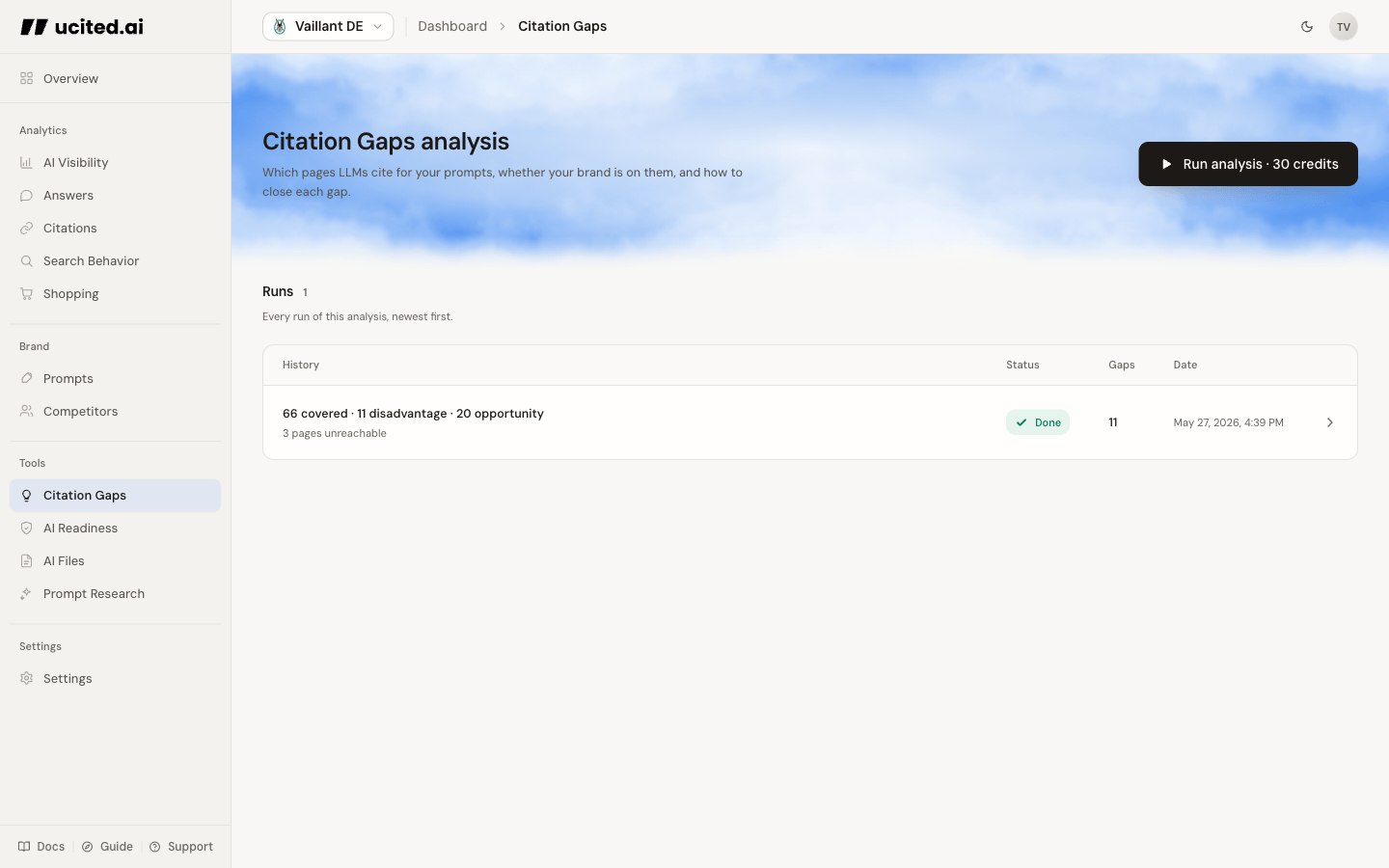
Citation Gaps is an analysis tool that evaluates your source and mention data and turns it into concrete content opportunities. It shows which cited pages matter for your topic, whether your client appears there, and where competitors are more visible.
Where to Find Citation Gaps
You can find the tool under Tools → Citation Gaps in the dashboard sidebar.
How Does the Analysis Work?
The Citation Gaps analysis runs in three phases:
- Collect sources — ucited.ai identifies cited URLs and relevant sources from your current answers.
- Check URLs directly — the pages are fetched and checked for whether your client or competitors appear in the HTML/text.
- Derive content actions — the result is recommendations such as “what to create next,” prioritized topics, and supporting source evidence.
The important difference from the old logic: Citation Gaps is no longer based only on SERP results. It uses real fetches of relevant sources, so you can see more accurately whether your client actually appears on those pages.
Understanding Results
The analysis results are presented across several tabs:
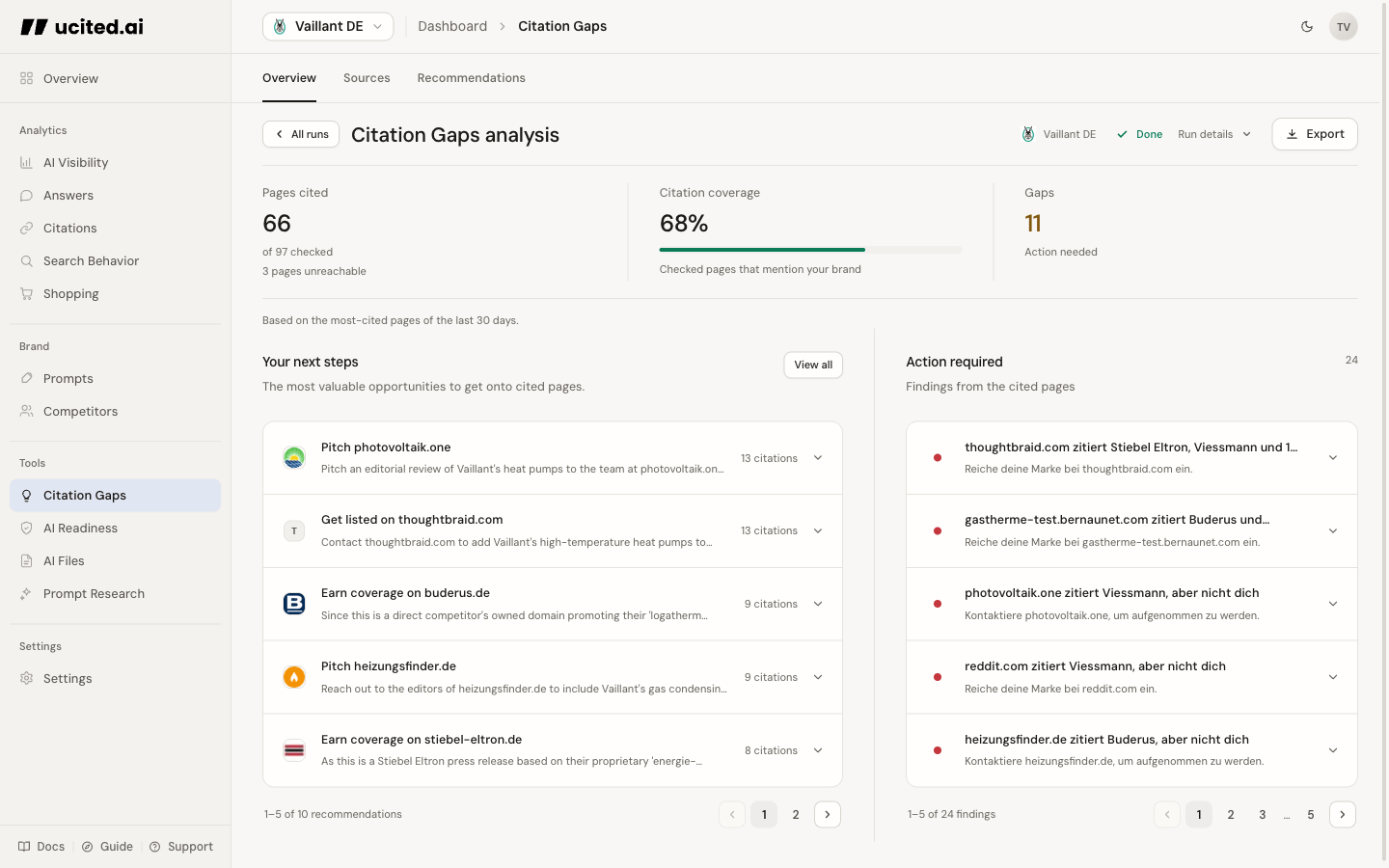
- Overview — summary of the most important gaps, priorities, and next actions.
- Sources — sources and URLs that matter in AI answers, including client and competitor signals.
- Content — concrete suggestions for what to create or improve.
- History — previous analyses so you can track developments and recurring gaps.
Progress and Status
While the analysis is running, you will see a progress bar with the current status. The analysis typically takes a few minutes. If a phase fails or produces no usable results, you can retry the affected phase.
The analysis requires sufficient data. If you have just set up prompts and competitors, it may take a few days before enough data is available for meaningful recommendations.
Implementing Recommendations
The generated recommendations are directly actionable. Typical recommendation types:
- Close content gaps — Create content on topics where competitors are visible but you are not
- Expand presence on third-party sites — Get listed or mentioned on frequently cited domains
- Optimize existing content — Improve pages that are cited but not yet optimally prepared for AI models
- Track new prompts — Expand your monitoring to cover topic areas that are not yet included
Work through the recommendations from top to bottom — they are sorted by priority. Start with the actions that have the greatest impact on your visibility.