Content Strategy
From data to strategy — how to derive targeted content planning from ucited.ai.
From Data to Strategy
ucited.ai provides you with the data foundation for an AI-optimized content strategy. Instead of guessing which content to create, you use insights from your dashboard to systematically identify and prioritize topics.
Prompt-Based Content Planning
Your tracked prompts are the ideal starting point for content planning:
Step 1: Identify Weak Prompts
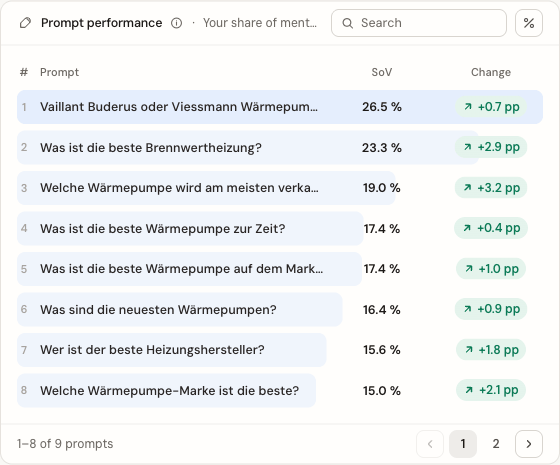
Open the Prompt Performance view and use topic, keyword, and prompt filters to find weak clusters. Individual prompts are useful, but the more important question is often: which topic area has low or declining SOV?
Step 2: Review Search Behavior
For weak or strategically important prompts, review Search Behavior. The recorded web searches show which related topics AI explores before answering. Use those topics to plan content that addresses the underlying questions.
Step 3: Create Content
Create content that covers the identified subtopics:
- Answer the prompt question directly and comprehensively
- Cover the related topics found in Search Behavior
- Use clear structures: headings, lists, FAQ sections
- Include current data and concrete examples
Structure your content so that it directly answers the prompt question in the first paragraphs. AI models prefer clear, direct answers.
Citation-Based Content Planning
In addition to prompt-based planning, you can also use your citation data as a foundation:
Analyze Frequently Cited Domains
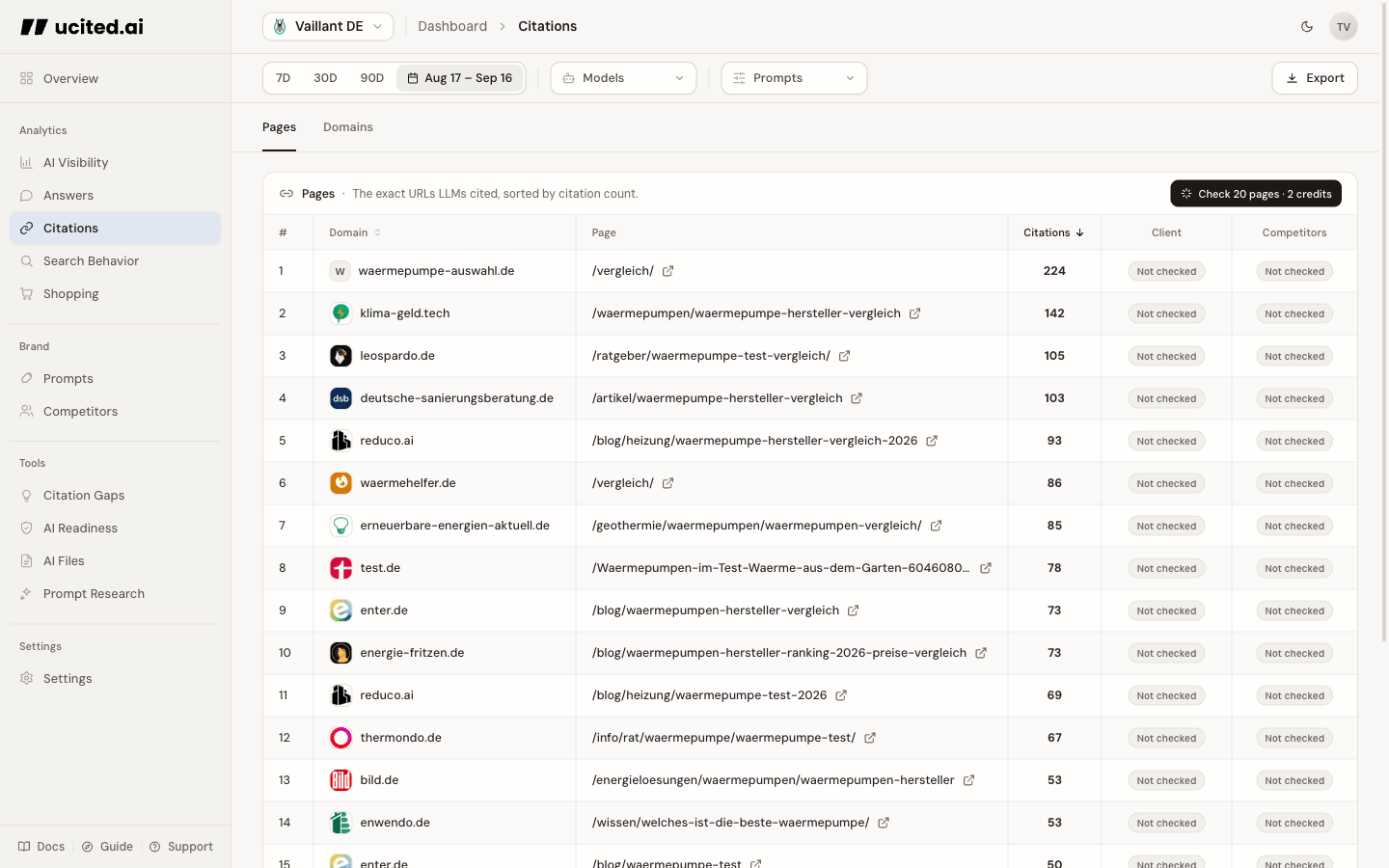
The most frequently cited domains show you what kind of content AI models prefer. Analyze these pages:
- What format does the content use? (Guide, comparison, list, study)
- How is it structured?
- What depth of information does it provide?
- Does it use structured data (Schema.org)?
Close Gaps
Domains where competitors are mentioned but you are not represent direct content opportunities:
- Create comparable or better content for your own website
- Contact domain operators for guest articles or listings
- Use the insights for PR and outreach campaigns
Prioritization
Not all content ideas are equally important. Prioritize according to the following criteria:
- Competitor gaps — Topics where competitors are visible but you are not (highest priority).
- Frequently cited topics — Areas with high citation counts where you are not yet present.
- Declining SOV — Prompts where your SOV is falling and you are losing market share.
- Emerging topics — New questions from Prompt Research that have little competition.
Create a monthly content roadmap with ucited.ai data. Prioritize 3–5 topics per month and track the results through SOV and citation development.