Shopping
How visible your brand and your products are when ChatGPT and Copilot recommend products.
What Shopping measures
Shopping analyses structured product recommendations captured in your tracked ChatGPT answers. It shows products, brands and positions, plus prices, ratings or shops where available. This view does not measure purchases, revenue or actual customer interactions.
The current Shopping view uses ChatGPT data. An empty view may reflect missing structured results, collection coverage or your filters. It does not prove that ChatGPT never recommends your products.
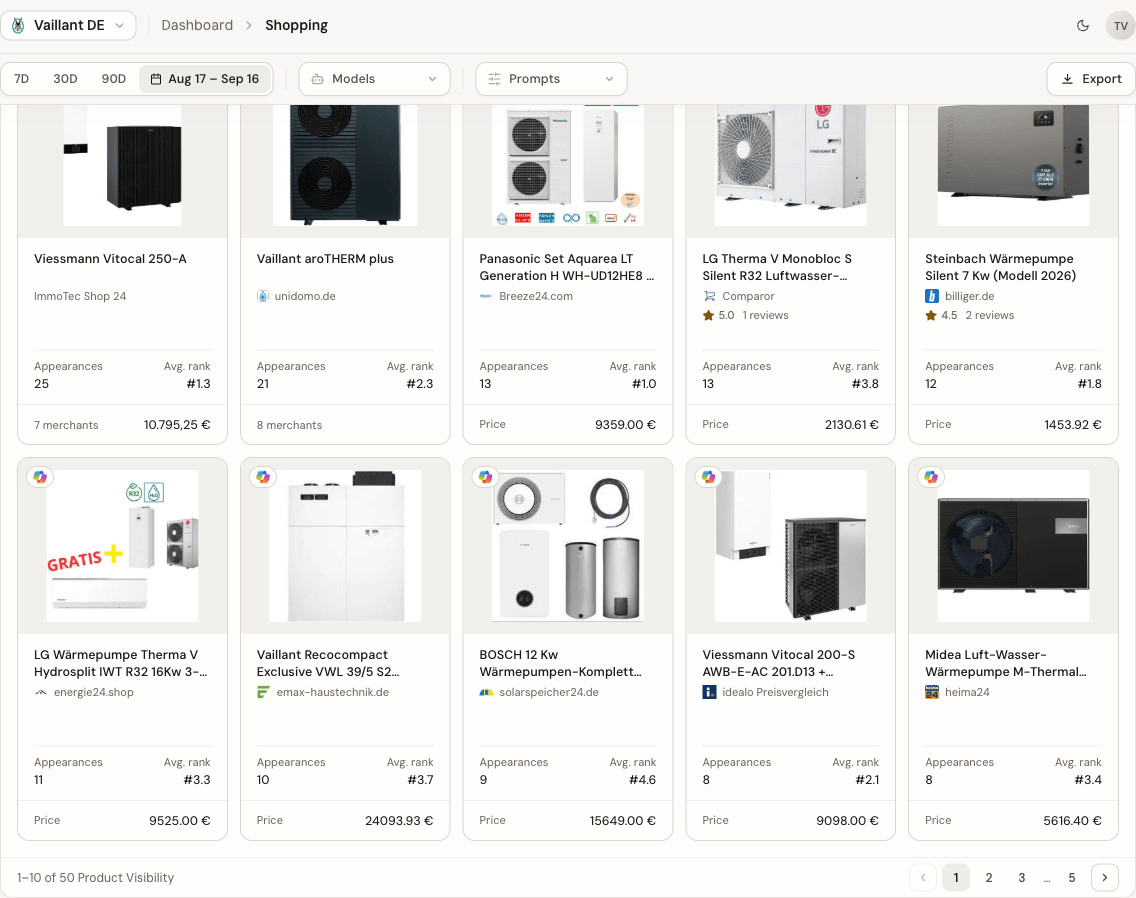
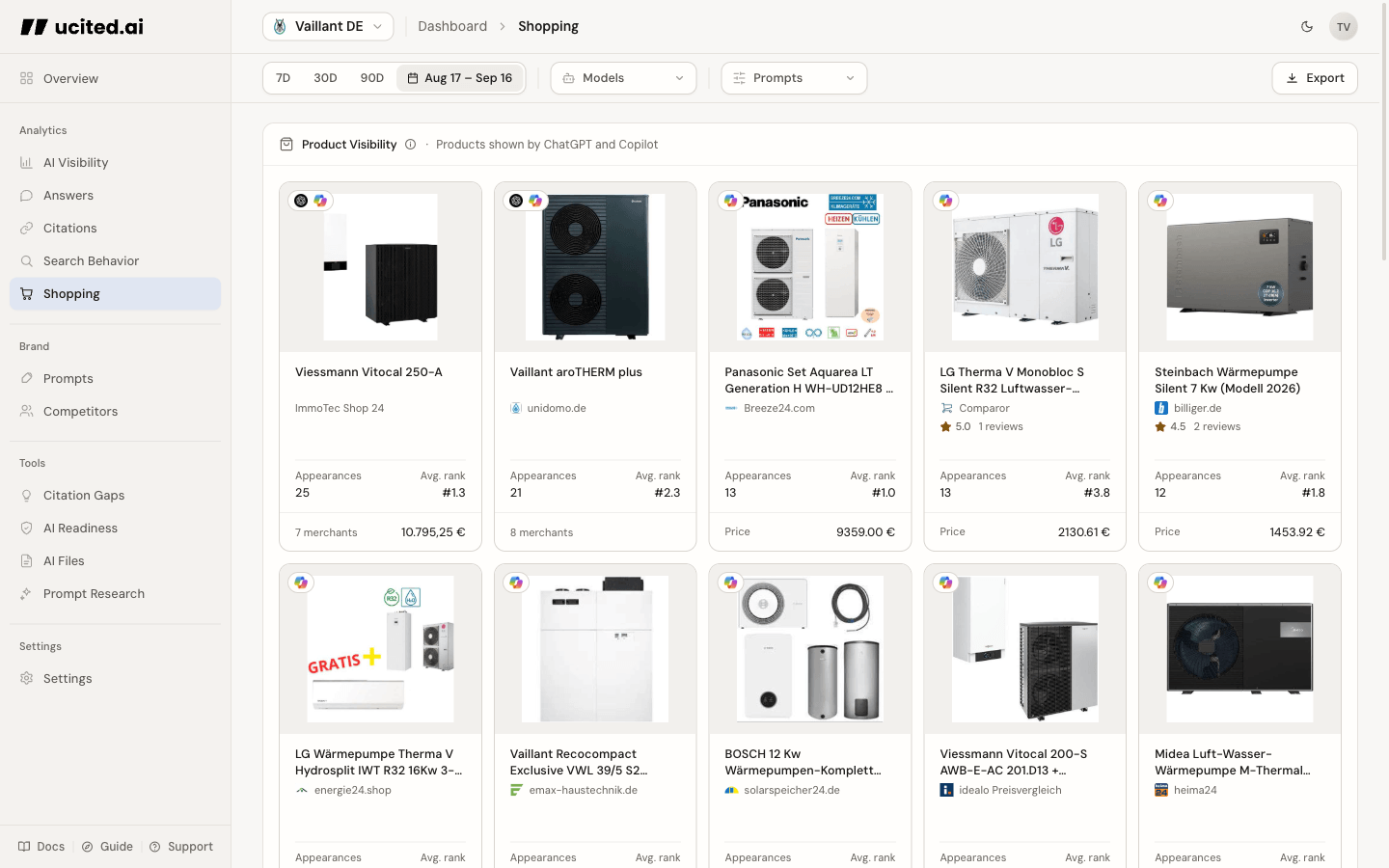
Product Visibility
The product gallery shows products from captured answers, their frequency and typical position within each selection. Additional details appear only where supplied. Interpret results within your prompts, market and selected period; they are not a global product ranking.
Top Brands
The Top Brands table ranks the brands ChatGPT and Copilot put in front of shoppers. For each one you see its visibility, meaning its share of all product mentions, its typical position in the list, and how often it appears. Your own brand is marked with a small label, and if it ranks further down it still stays pinned to the table, so you never lose sight of where you stand.
Products that match no tracked brand are left out of the ranking, but they still count toward the total. That keeps the shares honest, and the note below the table tells you how many mentions matched no brand.
A short prompt below the table points you to the searches that feed these rankings, so the table is not just a scoreboard but a starting point for what to fix. If your catalogue is empty, the table asks you to add brands first, because there is nothing to compare against yet.
Brand Visibility Over Time
Next to the Top Brands table, a chart draws a line for you and for each competitor, showing each brand's share of all the product mentions ChatGPT and Copilot made, day by day. When a competitor's line climbs above yours, they are winning more shopping visibility in that window. Every product ChatGPT and Copilot show is matched against the brands in your catalogue to decide who gets credited with the mention.
The chart only appears once you have a brand catalogue and at least one measured day. If it stays empty, add brands on the Competitors page and give it a little more data.
Google Shopping Search
Google Shopping Search displays captured search and product data behind shopping answers. Its metrics compare recorded searches, found products and products shown in the answer. They describe the available data, not every alternative considered internally.
The lists show available query text and captured products, including whether they appeared in the answer. Products not shown offer further research clues. They do not reveal the model’s complete decision process.
An empty section does not mean no search took place: without the provider capture, search data is missing even when product cards are visible.
How to work with this page
Choose purchase-oriented questions about use cases, budgets and product specifications. Then inspect which products appear in the measured answers. Use captured searches as research clues and compare them with product information and other keyword data. After changes, monitor the same prompts again. Individual sources, ratings or feed changes do not guarantee a particular recommendation.
Search Behavior
See what assistants search for across all your prompts, not just shopping.
Share of Voice
Compare shopping visibility with your general brand visibility.
Competitors
Curate the brand catalogue that every Shopping ranking is measured against.
Manage Prompts
Add purchase-oriented prompts to measure shopping visibility more directly.