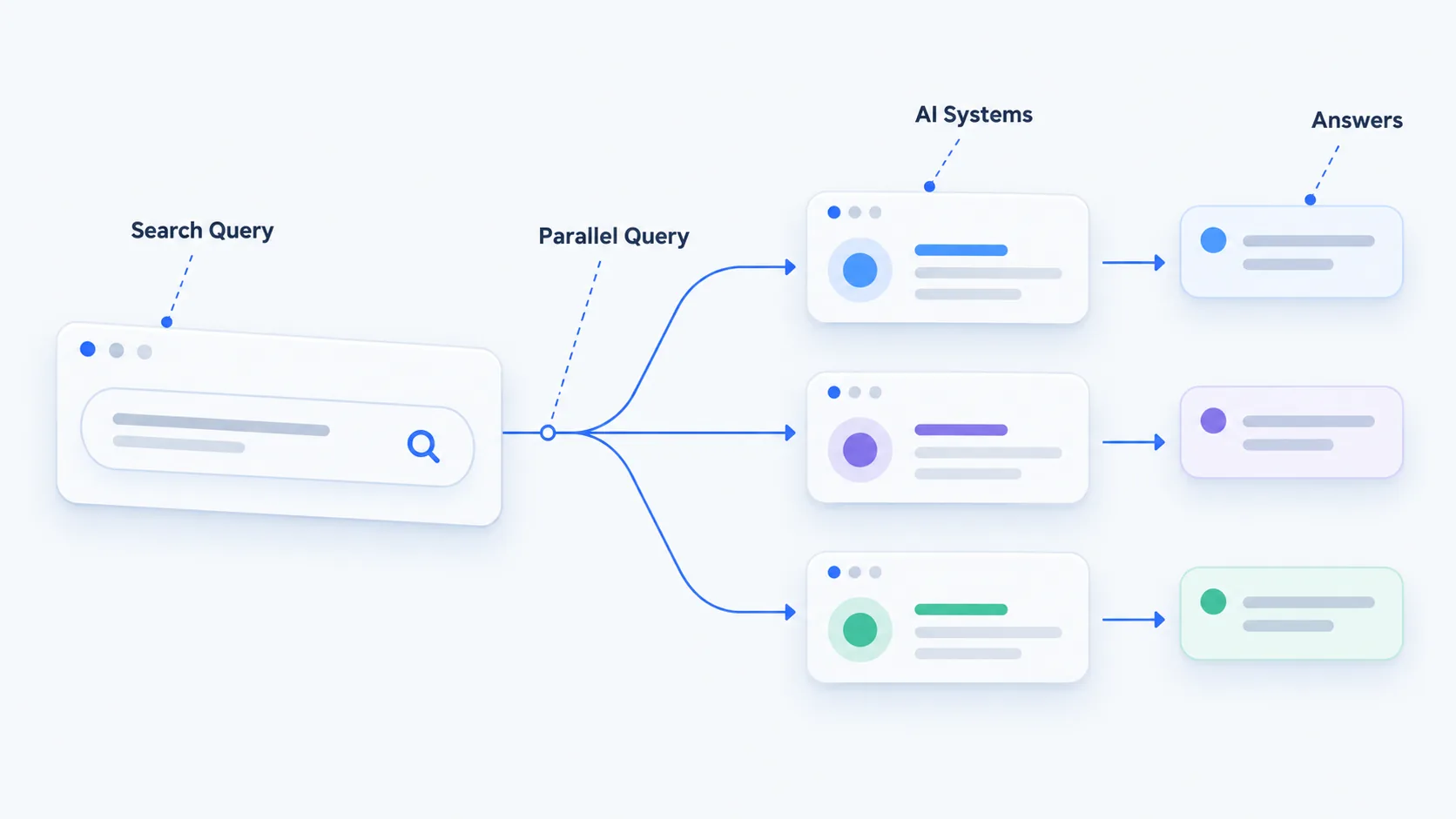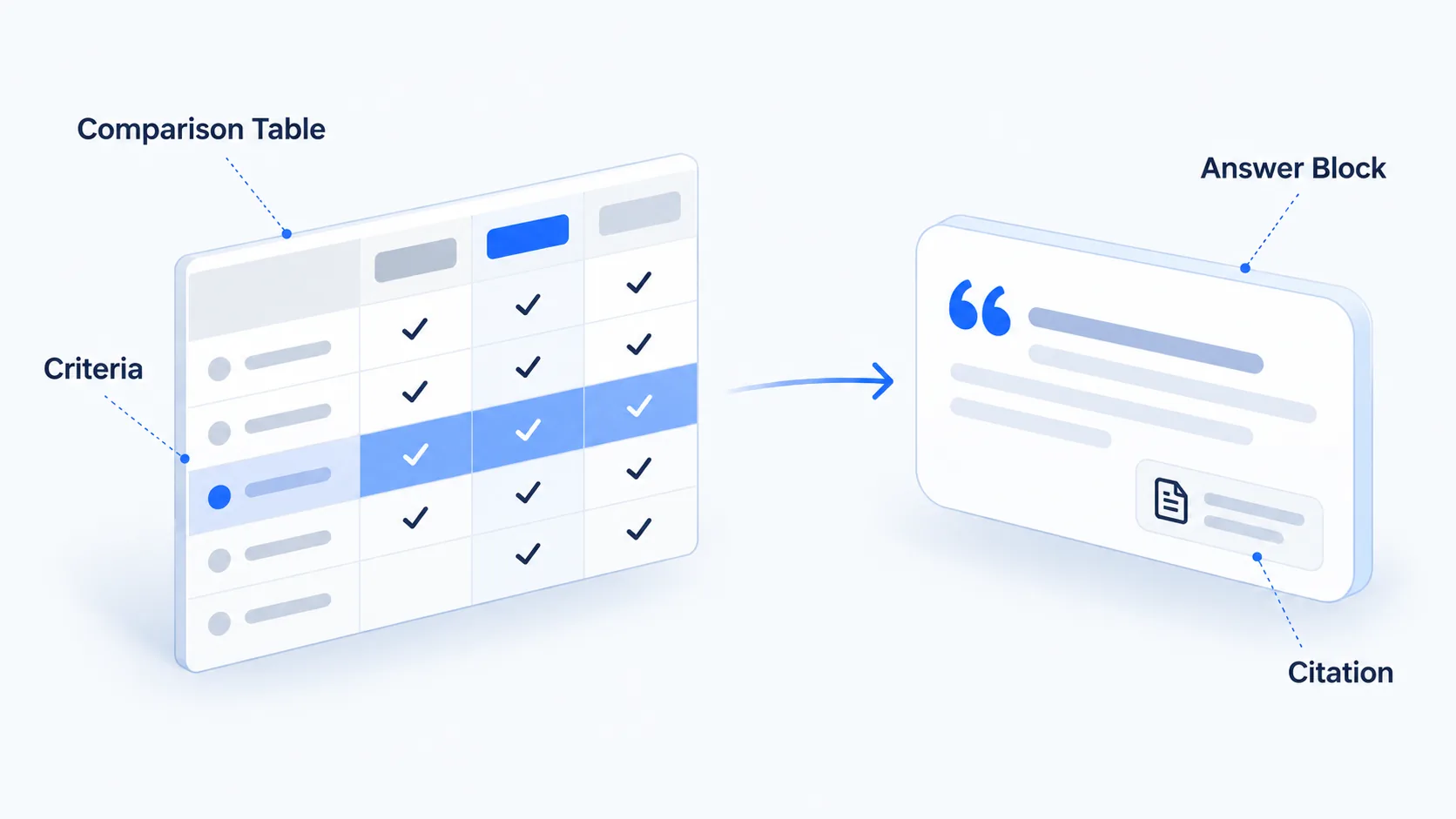
AI search engines such as ChatGPT, Perplexity and Google AI Overviews tend to cite pages that contain original statistics and first-party data because those pages give the model something concrete and verifiable to attribute. A page that states a specific number, names its source and explains how the number was obtained is easier for a generative engine to quote than a page that only paraphrases common knowledge. This guide explains why that happens, what the current citation landscape for this topic looks like in the ucited.ai knowledge graph, and how to structure data-driven pages so that they can be lifted into an AI answer as a self-contained block.
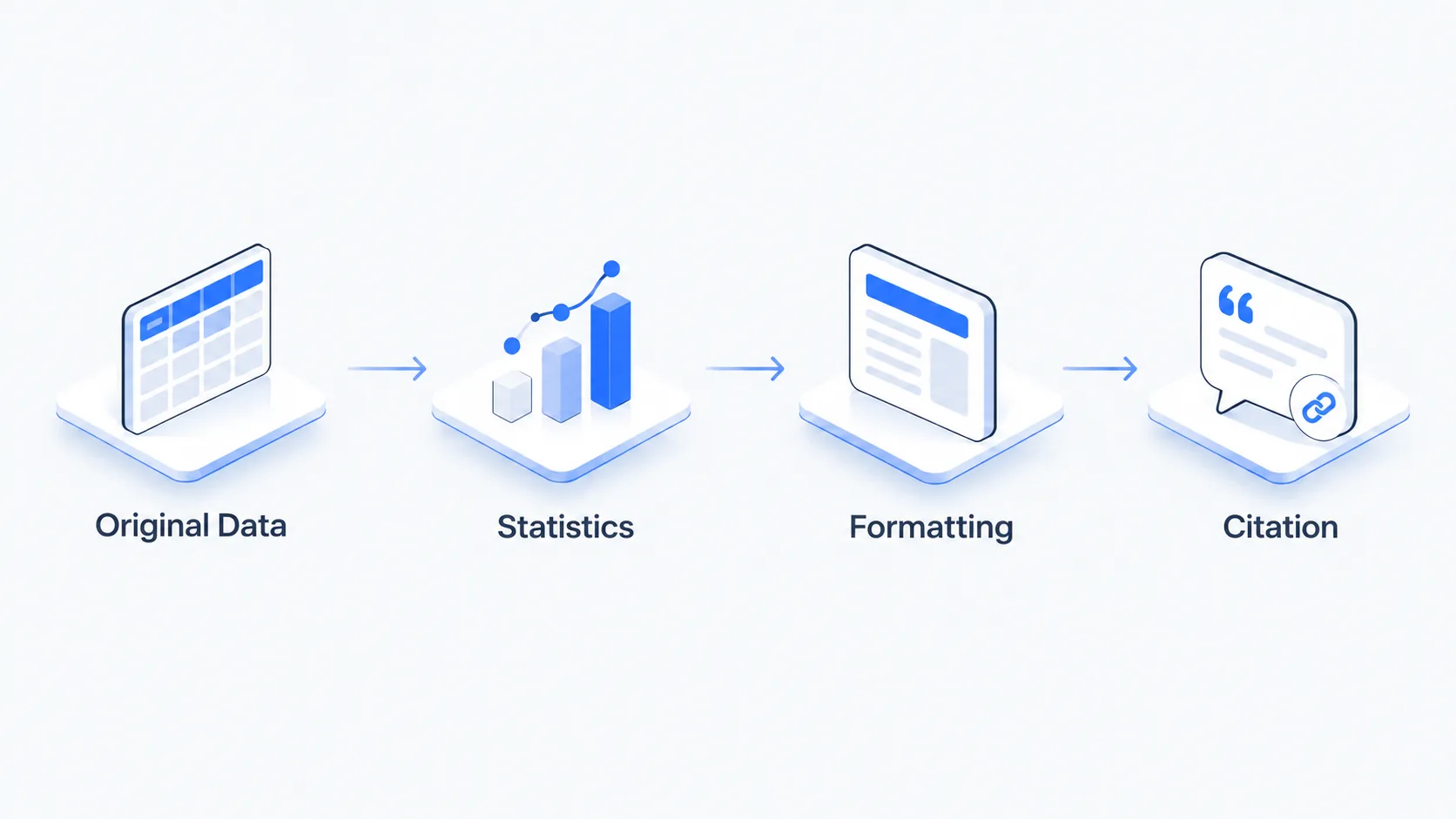
Why do AI search engines prefer pages with original statistics?
Answer: Generative engines cite pages with original statistics because a specific, sourced figure is a discrete, attributable claim that the model can anchor an answer to. Paraphrased or generic content offers no such anchor, so the engine has little reason to name it as a source. Experimental work on generative engine optimization reports that adding statistics and concrete numbers to content is one of the interventions associated with higher visibility in generated answers (Aggarwal et al. (2024)). The effect size for any individual site is not established; the supporting measures carry a literature prior rather than a confirmed per-site outcome.
Three mechanisms are commonly proposed for this preference:
- Attributability. A number with a named source is a claim the model can defend. The engine needs to point somewhere when it makes a quantitative statement, and a first-party dataset is a natural target.
- Uniqueness. If a statistic exists only on one page, that page is the only candidate for the citation. Repeated or aggregated figures are competed for by every site that republishes them.
- Extractability. Figures that appear inside a short, self-contained passage can be lifted without the surrounding context. Figures buried in long narrative paragraphs are harder to extract cleanly.
These mechanisms are consistent with the experimental literature cited above, but the relative weight of each is not measured. Claims about which mechanism dominates should be treated as hypotheses.
What does the citation landscape for this topic look like right now?
Answer: For the monitored prompts on this topic, the most frequently cited domains are ziptie.dev, subscribepr.com, developers.google.com, blog.google and arxiv.org (analysis of ucited citation data, as of September 2026). This is the current answer space on a topic directly adjacent to citation monitoring.
Most cited domains per prompt (analysis of ucited citation data, as of September 2026):
English prompt:
- ziptie.dev
- subscribepr.com
- developers.google.com
- blog.google
- stellar-ai.co
- searchengineland.com
German prompt:
- arxiv.org
- developers.google.com
- ihp-media.com
- internetmarketingagentur.de
- geaio.de
- ranktracker.com
- blog.google
Two patterns stand out. First, the English answer space is dominated by a small number of practitioner blogs plus Google's own documentation. Second, the German answer space is more fragmented and includes academic sources (arxiv.org, doi.org) alongside agency blogs. ucited.ai distinguishes cleanly between a brand mention and an actual source citation, so only the reliable signal is counted.
How should a data-driven page be structured so an AI engine can cite it?
Answer: Place each key statistic inside a short, self-contained answer block of two to four sentences that states the figure, its source, its date and its scope, so that the block makes sense when quoted on its own. Put the block directly under a heading phrased as the question a user would ask. Keep supporting methodology and caveats in a separate section below, so the quotable block stays clean while the page as a whole stays honest.
This is the measure recommended for this topic: self-contained answer blocks, classed as experimental in the research literature (Tian et al. (2026)). The recommendation rests on a literature prior, not on confirmed per-site results.
Anatomy of a citable statistic block
A block that a generative engine can lift cleanly typically contains four elements:
- The figure. One specific number, not a range unless the range itself is the finding.
- The source. Named dataset, study or internal measurement. If the source is your own monitoring, say so.
- The date or period. Statistics without a time reference are hard to reuse safely.
- The scope. What population, market, prompt set or model the figure applies to.
Example of a block built from ucited.ai graph data:
For the English prompt "Why do AI search engines prefer to cite pages with original statistics and first-party data?", ChatGPT answered with at least one citation in 6 out of 35 observed responses between the start of monitoring and 2026-09-16. The most frequently cited domain was ziptie.dev with 28 citations across all observed answers (ucited.ai knowledge graph, prompt 81).
Every element in that block traces back to a tool call. Nothing in it needs the surrounding page to be understood.
What not to do
- Do not bury the number. A statistic in the middle of a 200-word paragraph is less likely to be extracted than the same statistic in a dedicated block.
- Do not republish third-party figures as if they were yours. Aggregated industry numbers are contested by every site that repeats them. If you must include them, attribute them clearly and treat them as context, not as the page's own contribution.
- Do not round away precision without saying so. Rounded figures are fine, but state that they are rounded.
- Do not leave a claim without a source. If a figure cannot be sourced at the time of writing, do not drop it into the text unsupported; either source it or leave it out.
Where does first-party data come from for a GEO page?
Answer: The most defensible first-party data for a GEO page is your own measurement of how often and where your domain is cited in AI answers. Citation monitoring tools record which domains an engine names for a given prompt over time, which produces counts, shares and trends that no other site has. That kind of data is unique by construction, which addresses the uniqueness mechanism described above.
Typical first-party data sources for GEO content:
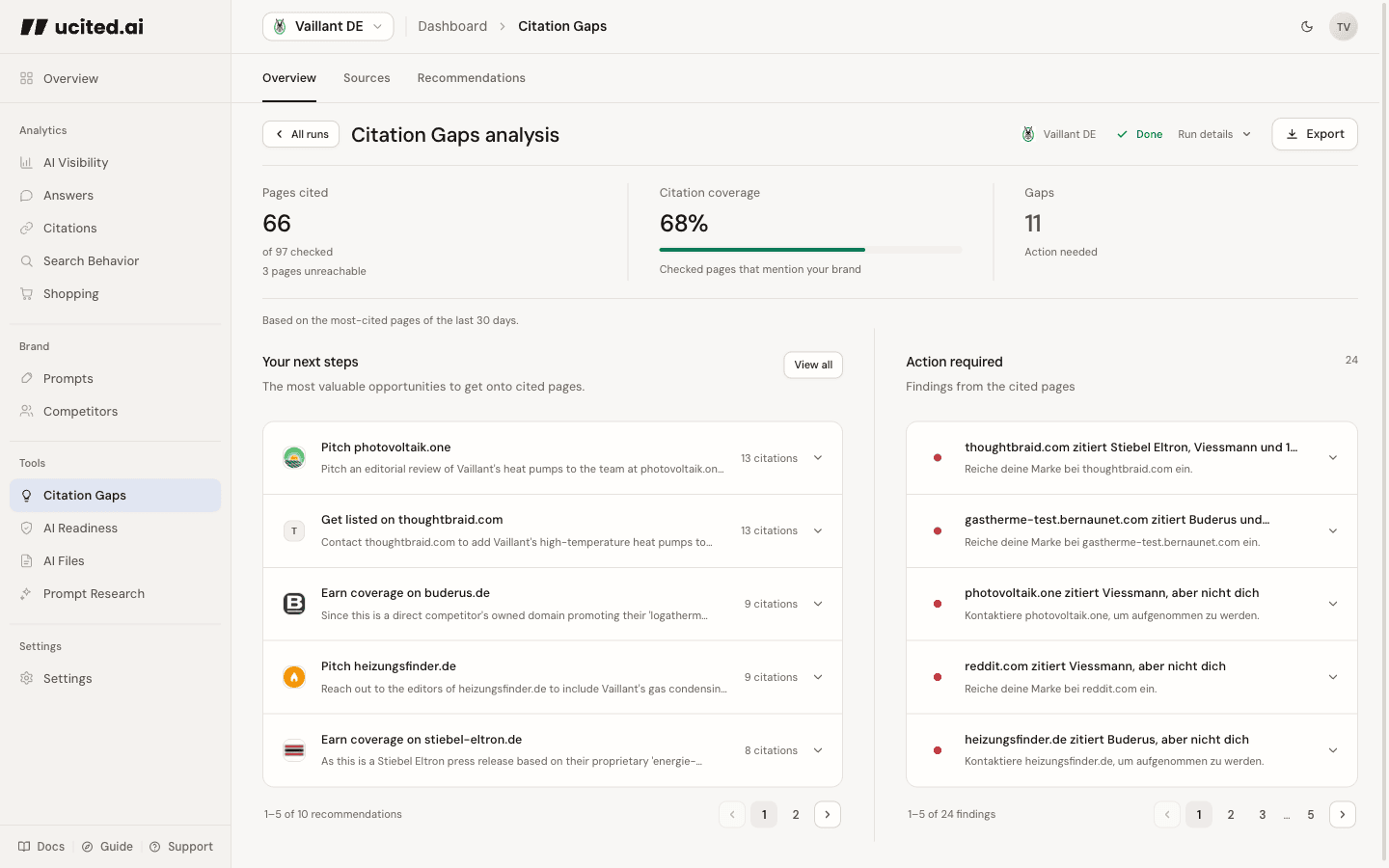
- Citation monitoring. Per-prompt, per-model counts of which domains are cited. This is the core data type ucited.ai collects.
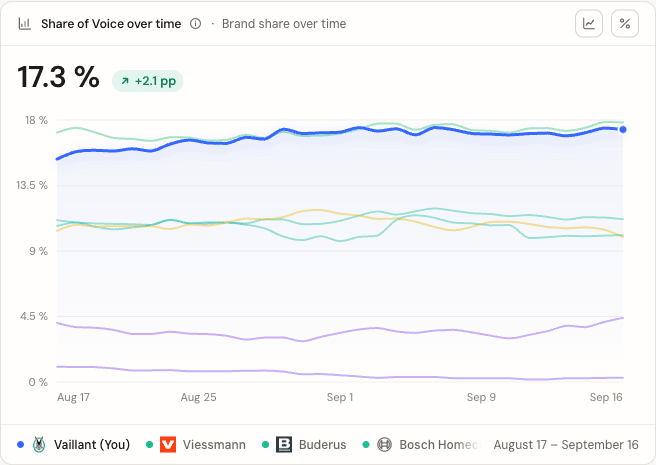
- Share of voice. Your domain's share of all citations for a topic or prompt set, compared with named competitors.
- Source landscape analysis. Which domain types (documentation, academic, practitioner blogs, forums) dominate the answers for a topic.
- AI-readiness checks. Structural properties of your own pages, such as presence of answer blocks, heading structure or extractable tables.
Any of these can be turned into a citable statistic block, provided the date, scope and method are stated. Comparisons over time are especially useful because they cannot be reproduced by a competitor who started measuring later.
How does this relate to the other GEO measures?
Answer: Original statistics, explicit citations, clear structure, self-contained answer blocks and diagnostic rather than generic optimization are the measures that rest on experimental evidence. They are complementary rather than competing: a statistic is only citable if it is sourced, and only extractable if it is structured.
Off-page signals such as community presence, corroboration across multiple sites and authority signals carry weaker evidence, and purely technical signals such as freshness, crawlability, structured data and llms.txt carry weaker priors still. These are working assumptions, not measured outcomes, and they shift as monitoring data accumulates.
Frequently asked questions
Does adding a statistic guarantee that an AI engine will cite my page?
No. The experimental literature associates statistics and concrete numbers with higher visibility in generated answers, but the effect is measured across many pages and prompts, not for any single site. The measure rests on a literature prior, not a confirmed per-site result.
Should I use third-party industry statistics if I have no data of my own?
You can, but attribute them precisely and do not present them as the page's own contribution. Third-party figures are competed for by every site that republishes them, so they rarely make your page the preferred source. First-party measurement is more defensible.
How large does a dataset have to be before it counts as original data?
There is no established threshold. The practical criterion is whether the figure is unique to your page and whether you can state its source, date and scope.
Which models are these observations valid for?
The citation counts in this guide come from the models where the citation signal is semantically reliable. ucited.ai distinguishes cleanly between a brand mention and an actual source citation, and reports the citation signal only where it is reliable.
How often should first-party statistics be updated?
Updating figures is good practice for accuracy regardless of citation effect, and each updated block should carry its new date.