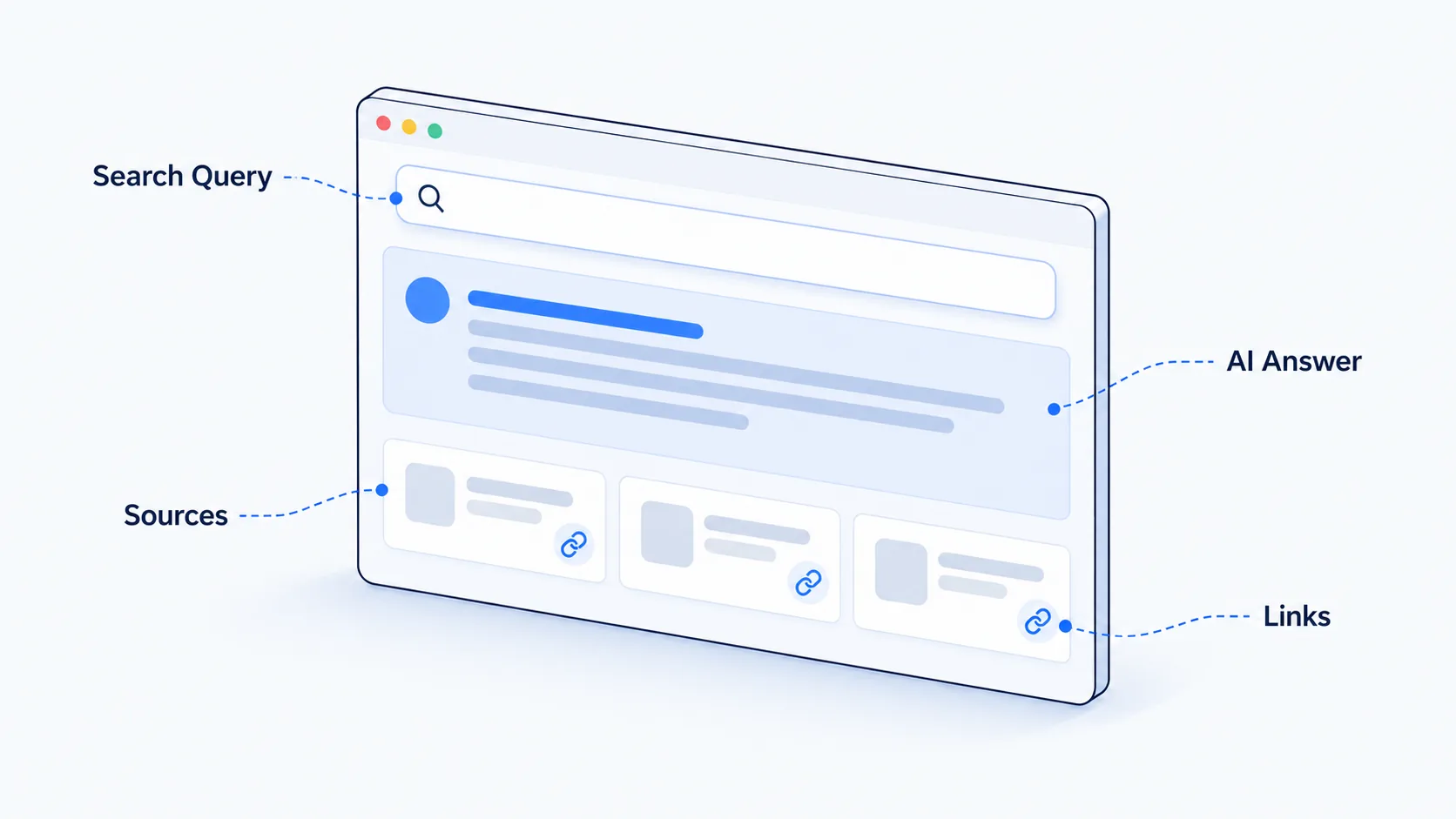
AI readiness describes whether a website can be crawled, parsed and quoted by the systems behind ChatGPT, Perplexity, Google AI Overviews and similar answer engines. A page that is technically citable is reachable for AI crawlers, delivers its main content without requiring JavaScript execution, exposes machine-readable structure (headings, structured data), and contains passages that answer a question completely on their own. ucited.ai measures the outcome of this work: how often a domain actually appears as a source in LLM answers for a defined set of prompts.
What "technically citable" means
Answer block: A page is technically citable when three conditions hold at the same time. First, AI crawlers are allowed to fetch the page and receive its full content. Second, the content is structured so that an LLM can locate the relevant passage without reading the whole document. Third, that passage is self-contained enough to be lifted into an answer without losing its meaning. Missing any one of the three usually means the page is skipped in favour of a competitor that meets all three.
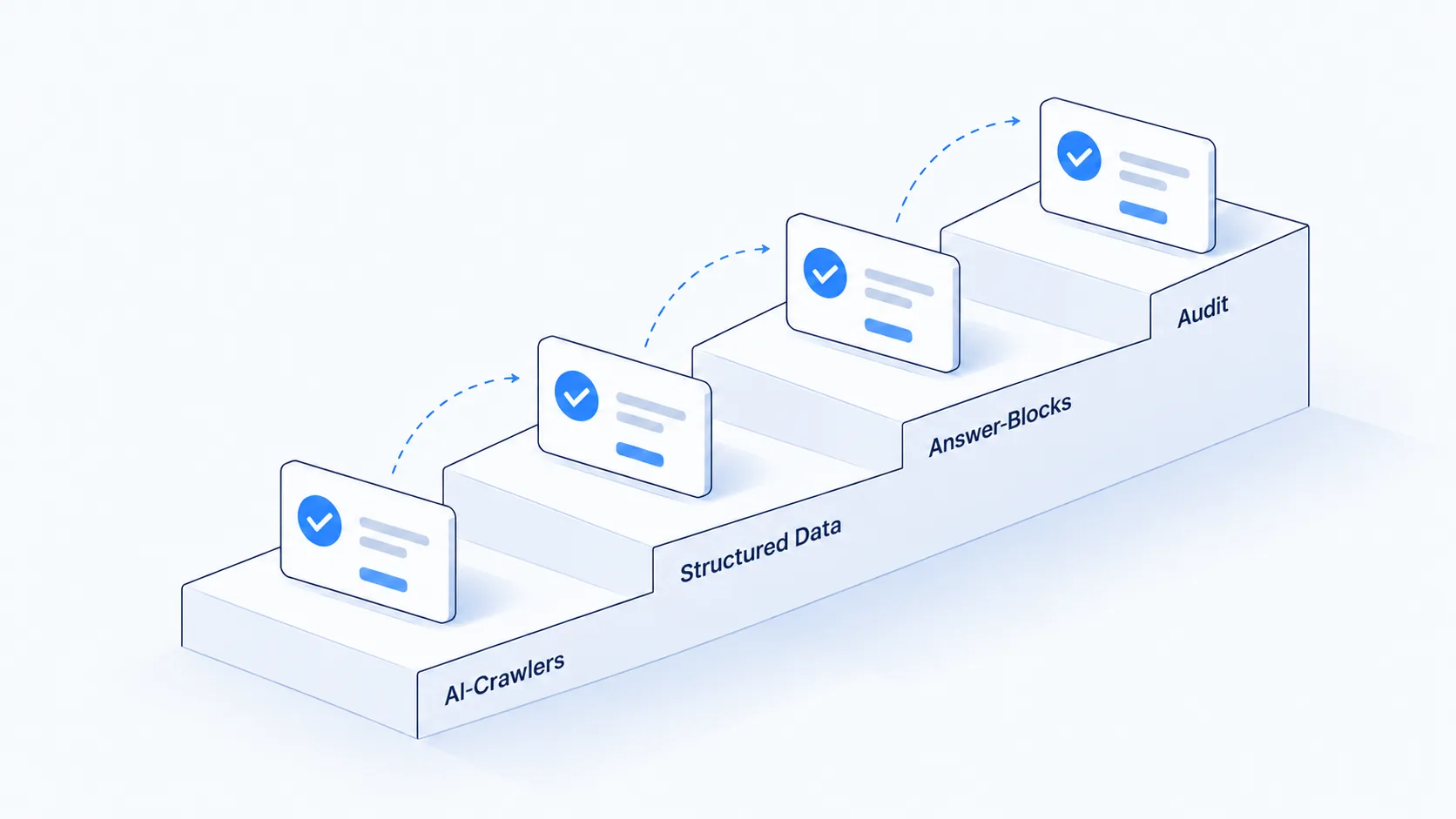
This page splits the check into four areas:
- Crawler access (
robots.txt,GPTBot,OAI-SearchBot,PerplexityBot,Google-Extended) - Rendering and content delivery
- Structured data and semantic HTML
- Answer blocks: self-contained, quotable passages
1. Crawler access: can AI systems fetch your pages at all?
Answer block: AI systems can only cite what their crawlers are allowed to read. Access is governed by your robots.txt, by server-side bot blocking (firewalls, CDN rules) and by HTTP status codes. If GPTBot, OAI-SearchBot or PerplexityBot are disallowed or blocked at the edge, the affected pages cannot appear as sources in those systems, regardless of content quality.
Checklist:
- robots.txt rules per user agent. Review every
User-agentblock. A blanketDisallow: /for unknown agents also catches new AI crawlers. Distinguish between training crawlers and search/answer crawlers where the vendor offers separate user agents. Vendor documentation is the authoritative source for current user-agent names; both developers.google.com and help.openai.com are among the domains most frequently cited for this topic (analysis of ucited citation data, as of September 2026). - CDN and firewall rules. Cloudflare and comparable providers offer AI-bot blocking as a toggle. Check whether it is active. cloudflare.com is also among the cited domains for this question.
- HTTP status codes. Pages that return 403, 429 or 5xx to bot user agents are effectively invisible. Test with the actual user-agent strings, not just a browser.
- Log analysis. Server logs show which AI user agents actually reach which URLs and how often. This is the only direct evidence that access works in practice.
2. Rendering: does the crawler receive the content?
Answer block: Most AI crawlers fetch raw HTML and do not reliably execute JavaScript. Content that appears only after client-side rendering, behind a cookie consent layer, or inside an infinite-scroll component may be absent from what the crawler sees. Server-side rendering or static HTML for the main content is the safest path to citability.
Checklist:
- Fetch the page with JavaScript disabled and confirm that the main text, headings and lists are present in the HTML response.
- Ensure the primary content is not gated behind consent banners or interstitials for bot user agents.
- Keep the canonical URL stable and avoid duplicate variants (trailing slash, query parameters, http/https) that split signals.
- Verify that
<title>,<h1>and the first paragraph state the topic explicitly.
3. Structured data and semantic HTML
Answer block: Structured data (schema.org JSON-LD) and clean semantic HTML help LLM pipelines identify what a page is about, who published it and which parts are the actual answer. Structured data does not guarantee a citation, but it removes ambiguity about entity, authorship and content type, which lowers the cost of using the page as a source.
Recommended elements:
Organization/WebSitewith name, logo andsameAslinks to verified profiles.ArticleorTechArticlewithauthor,datePublished,dateModifiedandheadline.FAQPagefor question-and-answer sections, where eachacceptedAnsweris a self-contained answer block.HowTofor step-by-step checklists such as this one.BreadcrumbListfor site hierarchy.- Proper heading order (
h1→h2→h3), lists as<ul>/<ol>, tables as<table>, definitions where appropriate.
Validate markup with Google's Rich Results Test and the Schema Markup Validator. Whether a given LLM pipeline reads a specific schema type is not publicly documented by all vendors; treat structured data as a robustness measure, not a ranking lever.
4. Answer blocks: the passage the LLM will actually quote
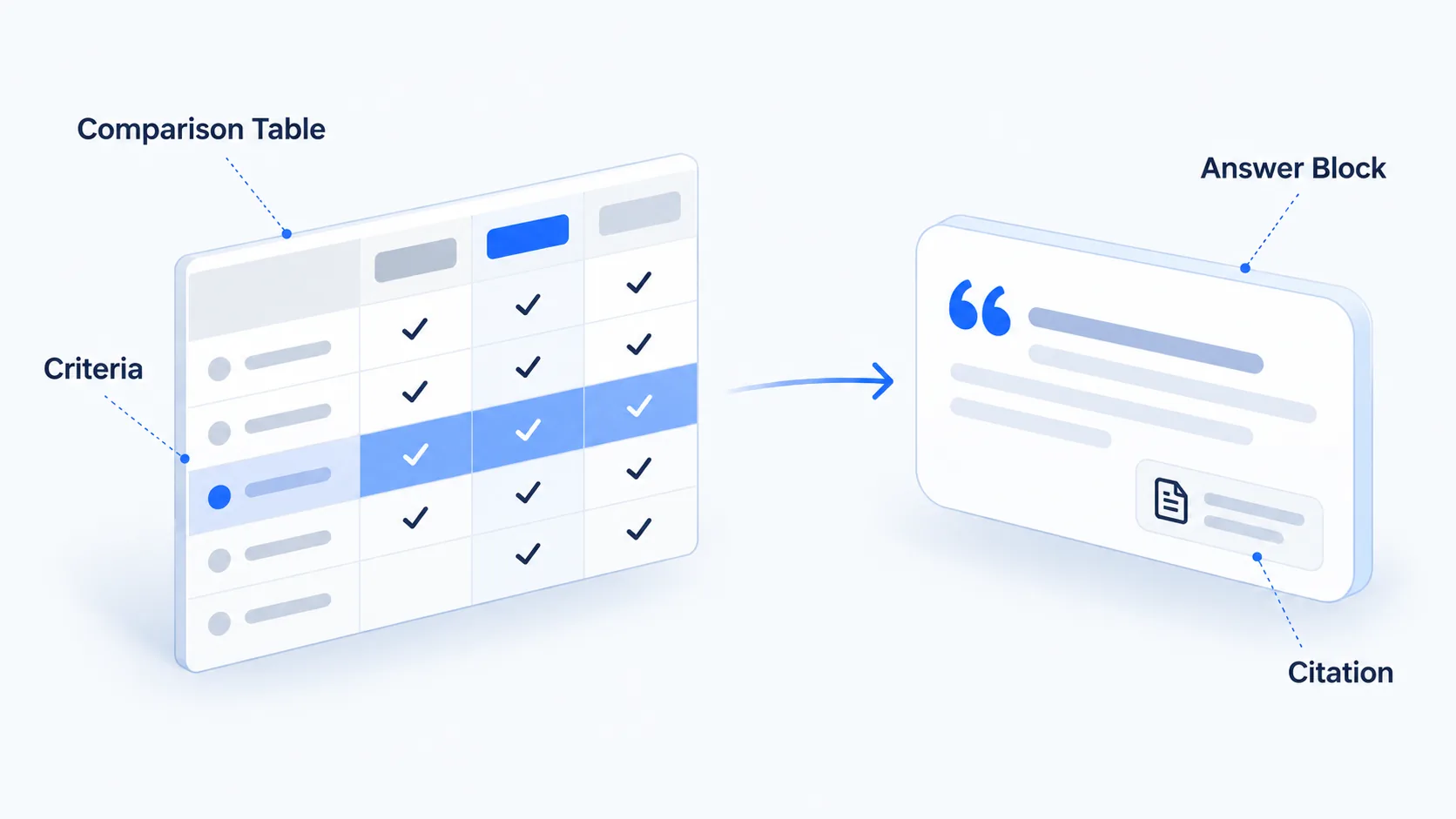
Answer block: An answer block is a passage of two to four sentences that answers one clearly stated question completely, without depending on the surrounding text. It is placed directly under a heading that states the question, uses concrete nouns instead of pronouns, and names the subject explicitly. Answer blocks are the unit LLM systems extract when composing an answer, so each key section of a page should open with one.
Why this matters for AI readiness: the retrieval step in ChatGPT, Perplexity and AI Overviews works on passages, not on whole pages. A page can be perfectly crawlable and still be skipped if no single passage carries the answer. Self-contained answer blocks are the measure recommended for this topic, with experimental backing from Tian et al. (2026). The measure is experimental, meaning the effect size for this topic is established through ongoing monitoring.
How to write one:
- Turn the section heading into the question a user would ask.
- Open the section with a direct answer of two to four sentences. State the subject by name.
- Follow with detail, lists or caveats. The opening block must stand alone even if everything after it is cut.
- Avoid forward references ("as shown above", "see below") inside the block.
- Keep one idea per block. Split if the question has two parts.
How ucited.ai fits into an AI readiness audit
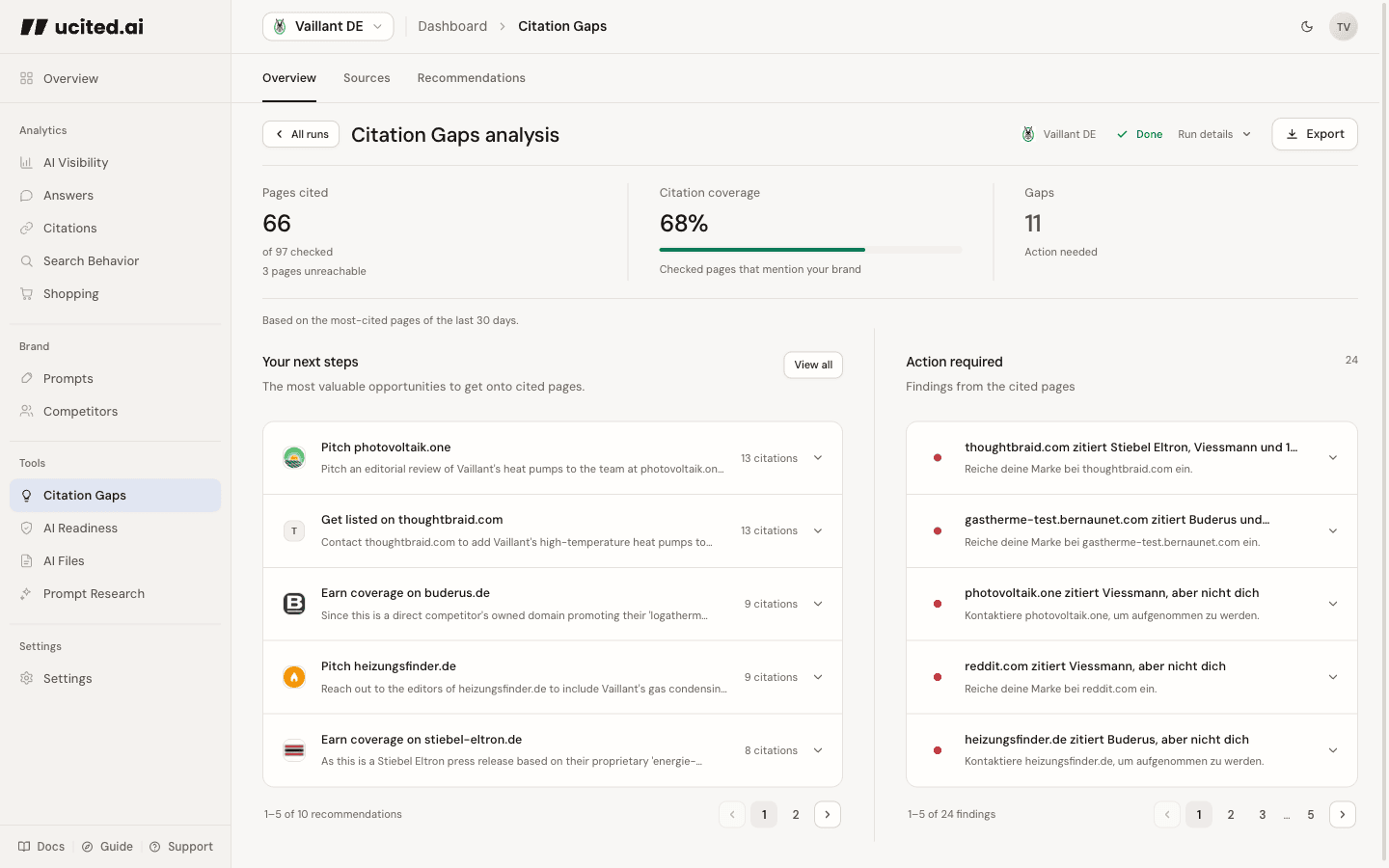
Answer block: ucited.ai is a SaaS analytics tool that monitors how often a domain is cited in LLM answers across platforms such as ChatGPT, Perplexity and Google AI Overviews for a defined prompt set. It complements a technical AI readiness audit by measuring the outcome: whether the fixes to crawler access, rendering, structured data and answer blocks actually translate into citations over time. ucited.ai does not implement the changes; it shows whether they worked.
Core functions relevant to this workflow:
- LLM citation monitoring: repeated observation of which domains are cited per prompt and per model, with timestamps.
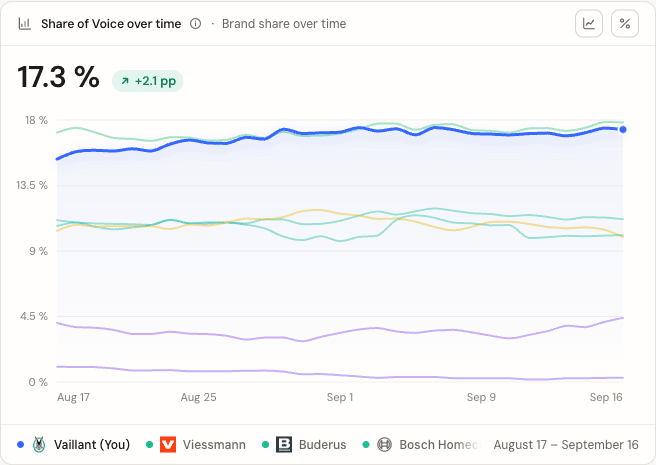
- Citation Share of Voice: the share of citations a domain holds against competitors within a prompt set.
- Source and citation analysis: which domains dominate a topic and which URLs they are cited for.
- AI readiness view: the technical checklist above, mapped against the observed citation data for a domain.
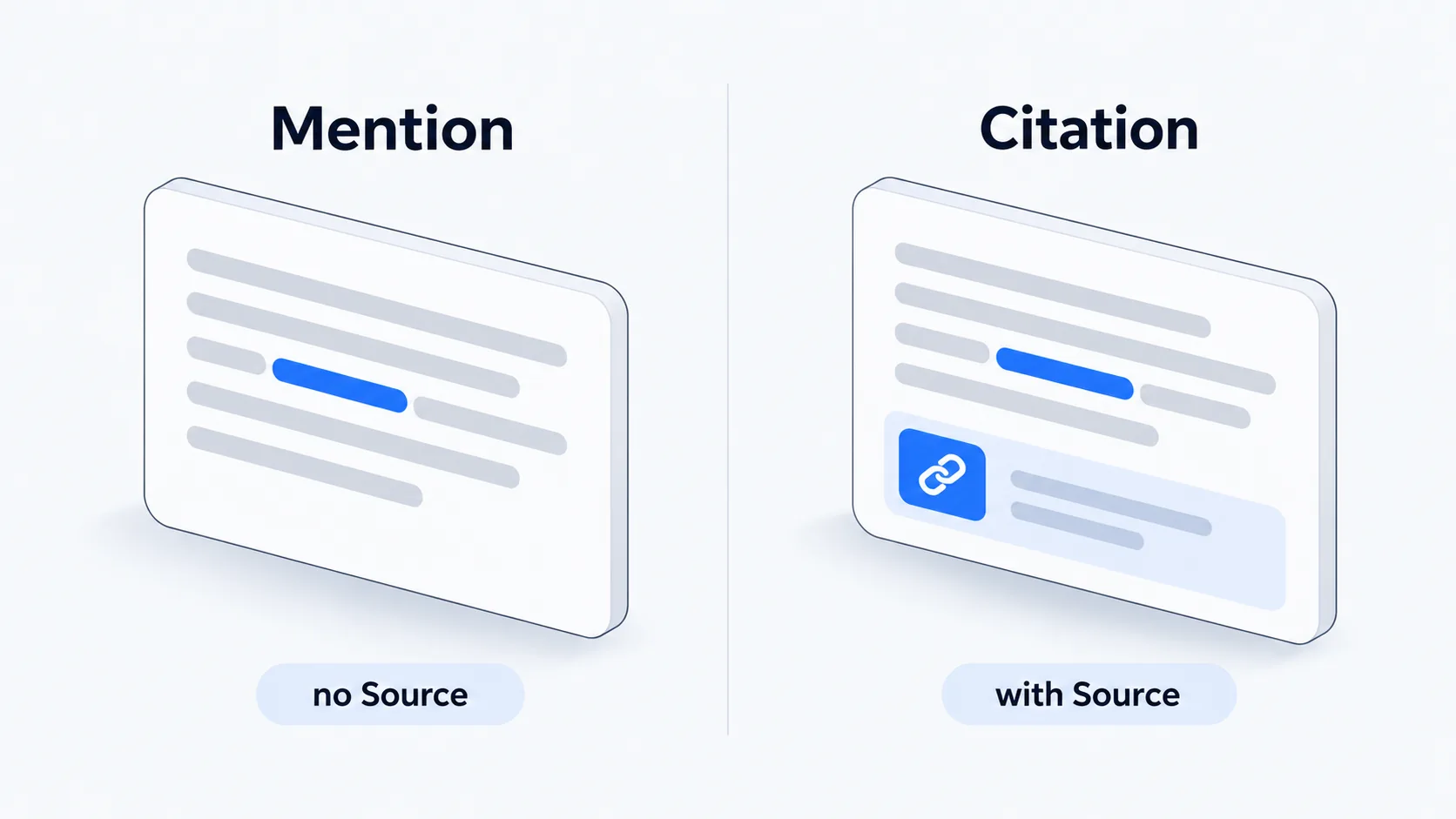
Note on interpretation: ucited.ai distinguishes cleanly between a brand mention and an actual source citation, and reports the citation signal only where it is semantically reliable. This keeps the reported citation rate conservative and trustworthy.
What the citation data shows for the "AI readiness audit" topic
For the prompt "Which tools offer an AI readiness audit for websites?" the most frequently cited domains include seitenreport.de, optimizegeo.ai, pagechecks.com and elitesiteoptimizer.ai (analysis of ucited citation data, as of September 2026). Across the wider topic, developers.google.com, optimizegeo.ai, elitesiteoptimizer.ai, seitenreport.de, llmrefs.com and conbersa.ai are dominant sources.
AI readiness checklist (summary)
Answer block: A minimal AI readiness audit checks four things in order: whether AI crawlers are allowed and able to fetch the page, whether the main content is present in the raw HTML, whether structured data and semantic HTML describe the page unambiguously, and whether each key section opens with a self-contained answer block. Fixing them in that order avoids optimising content that no crawler will ever see.
robots.txtreviewed per AI user agent (GPTBot,OAI-SearchBot,PerplexityBot,Google-Extended, others per vendor docs)- CDN / firewall AI-bot blocking checked
- Bot user agents receive HTTP 200 for target URLs
- Server logs confirm AI crawler visits
- Main content present with JavaScript disabled
- No consent or interstitial gating for bots
- Canonical URLs stable, duplicates resolved
- JSON-LD for Organization, Article/TechArticle, FAQPage or HowTo where applicable
- Heading hierarchy and list/table markup correct
- Each key section opens with a two-to-four-sentence answer block
- Citation monitoring in place to measure the effect over time
Frequently asked questions
What is AI readiness for a website?
AI readiness is the degree to which a website can be fetched, parsed and quoted by LLM-based answer systems. It covers crawler access, content rendering, structured data and the presence of self-contained, quotable passages. It is distinct from classic SEO in that the target is being used as a source in a generated answer, not ranking in a list of links.
Should I block GPTBot?
Blocking GPTBot prevents OpenAI's training crawler from fetching your pages. Whether that also affects citations in ChatGPT search answers depends on which user agent OpenAI uses for retrieval at a given time; consult help.openai.com for the current distinction between training and search crawlers. If citations in ChatGPT are a goal, do not block the retrieval-related user agent.
Does structured data make my page get cited?
Structured data alone does not cause citations. It makes the page easier to interpret correctly and reduces ambiguity about entity and content type. Citations depend primarily on whether the page is accessible and contains a passage that answers the question.
How do I know if the audit worked?
Measure citations before and after the changes for a fixed set of prompts and models. A rising share of answers that cite your domain, compared with competitors on the same prompts, is the outcome signal. ucited.ai provides this measurement as LLM citation monitoring and Citation Share of Voice.
What is an answer block?
An answer block is a passage of two to four sentences that fully answers one question without relying on the surrounding text. It sits directly under a heading phrased as that question and names its subject explicitly. It is the unit an LLM is most likely to extract when it composes an answer.