Comparison articles and "best tools" listicles get cited by AI assistants when each section can stand on its own as a complete, quotable answer. ChatGPT, Perplexity and Google AI Overviews extract short passages, not whole pages. A listicle earns citations when every entry states what the tool is, who it is for and how it differs from the alternatives in two to four self-contained sentences, before any supporting detail follows.
This guide explains the answer-block pattern for comparison content, how to structure a best-of list so an LLM can lift individual entries, and how to verify with citation monitoring whether the format actually changed anything.
What makes a comparison article citable by AI?
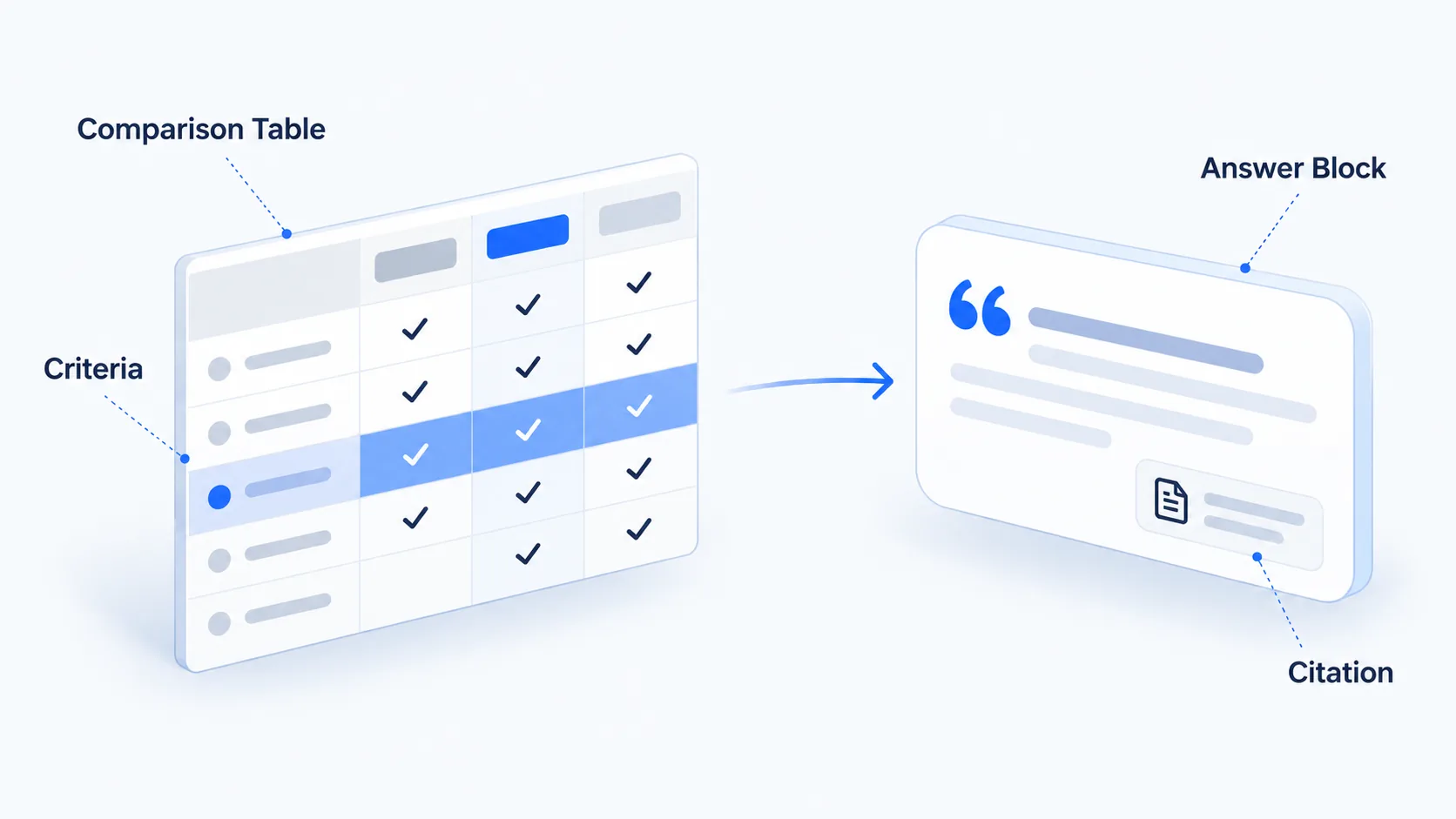
An AI-citable comparison article is one where every tool entry, every verdict and every FAQ answer is a self-contained block that reads correctly out of context. The AI assistant does not need the introduction, the previous entry or the table to understand the passage. Self-contained answer blocks are the measure with the strongest experimental backing for this content type (Tian et al. (2026)), although the evidence is still experimental rather than settled.
Three properties follow from that definition:
- Complete on its own. The passage names the subject explicitly instead of using "it" or "this tool", and it answers the question that a heading implies.
- Short and dense. Two to four sentences. Longer passages get truncated or paraphrased, and paraphrased text is less likely to carry a citation link back to your page.
- Positioned at the top of the section. The answer block comes first under the heading. Supporting detail, screenshots and caveats follow afterwards.
Why most listicles are not cited
Most best-of lists are not cited because their entries depend on surrounding context, bury the verdict at the end of each section, and describe features without stating a comparison. An LLM that lifts one entry from such a list gets a fragment that does not answer the reader's question, so it either paraphrases without attribution or picks a different source.
Common patterns that block extraction:
- Entries that open with marketing lines ("A powerful all-in-one platform") instead of a factual statement of what the tool does.
- Verdicts that only appear in a summary table at the very end of the page.
- Pronoun chains across entries ("It also offers…") that only make sense in reading order.
- Rankings without stated criteria, so the assistant cannot explain why an item ranks where it does.
The answer-block pattern for comparison content
The answer-block pattern means every heading in a comparison article is immediately followed by two to four sentences that fully answer the question the heading implies. For a tool entry that block states the tool name, its core function, its target user and its main difference from the alternatives. Everything else in the section is supporting evidence for that block.
Template for a single tool entry
## <Tool name>

<Tool name> is a <category> that <core function> for <target user>.
It differs from <alternative(s)> by <main differentiator>.
It fits best when <use case>; it fits poorly when <limitation>.

<Optional: 3–5 bullet points with concrete features, pricing note or limitations>
Where you cannot state a differentiator or limitation from verified information, leave it out of the draft rather than guessing. A comparison article with a verified gap is more trustworthy than one with an invented claim.
Template for the overall verdict
Put the overall verdict directly under the H1 or the first H2, not at the end:
## Which <category> tool is best for <audience>?

For <audience>, <Tool A> is the strongest option when <condition>,
<Tool B> when <condition>, and <Tool C> when <condition>.
The ranking is based on <criteria>.
Template for a comparison of two tools
## <Tool A> vs <Tool B>

<Tool A> and <Tool B> both <shared function>. <Tool A> focuses on
<focus>, while <Tool B> focuses on <focus>. Choose <Tool A> if
<condition>; choose <Tool B> if <condition>.
How to structure the full article
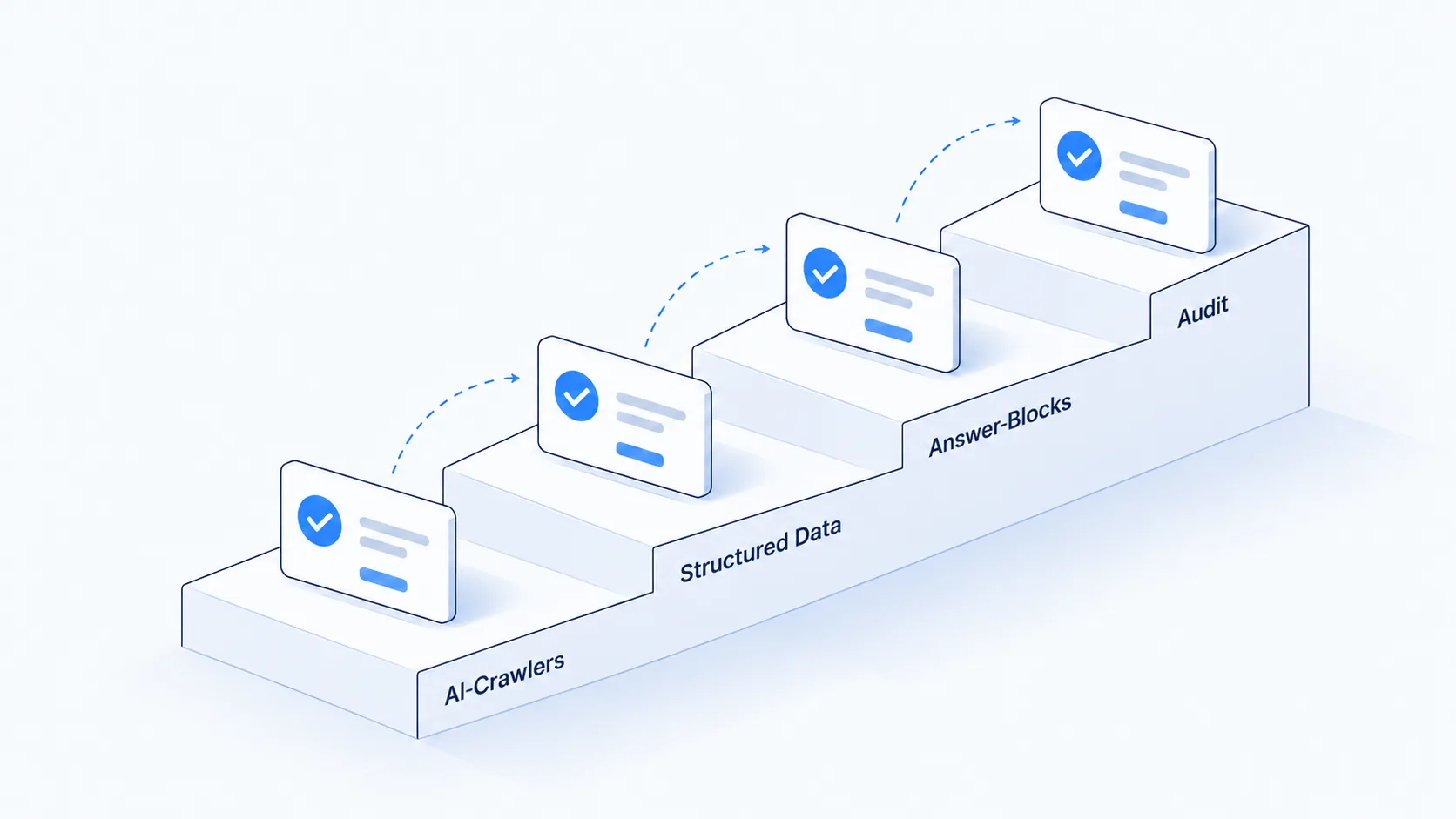
A citable comparison article follows a fixed structure: verdict first, then criteria, then one section per tool with an answer block at the top, then a comparison table, then an FAQ. This order lets an AI assistant extract the verdict, an individual entry or an FAQ answer independently.
- H1 with the question or the comparison stated plainly. "Best LLM visibility tools for agencies" beats "The ultimate guide to AI visibility".
- Verdict block directly under the H1. Two to four sentences, see template above.
- Selection criteria. One short section stating how the tools were evaluated. This is what makes a ranking explainable.
- One H2 per tool. Answer block first, details afterwards.
- Comparison table. Rows are tools, columns are the criteria from step 3. Keep cell contents short and factual.
- FAQ. Each question is an H3, each answer is a self-contained block.
- Update date and method note. State when the comparison was last checked and how. Do not invent a date; use the actual review date.
Which sources currently get cited for this topic?
For the question "How do I write comparison and best-of listicle articles that AI assistants use as a source?", the answers currently cite mainly getmasset.com, trackmyvisibility.com, developers.google.com, unusual.ai and openai.com (analysis of ucited citation data, as of September 2026). The gap is the reason this guide exists.
Two details matter for how you read such figures:
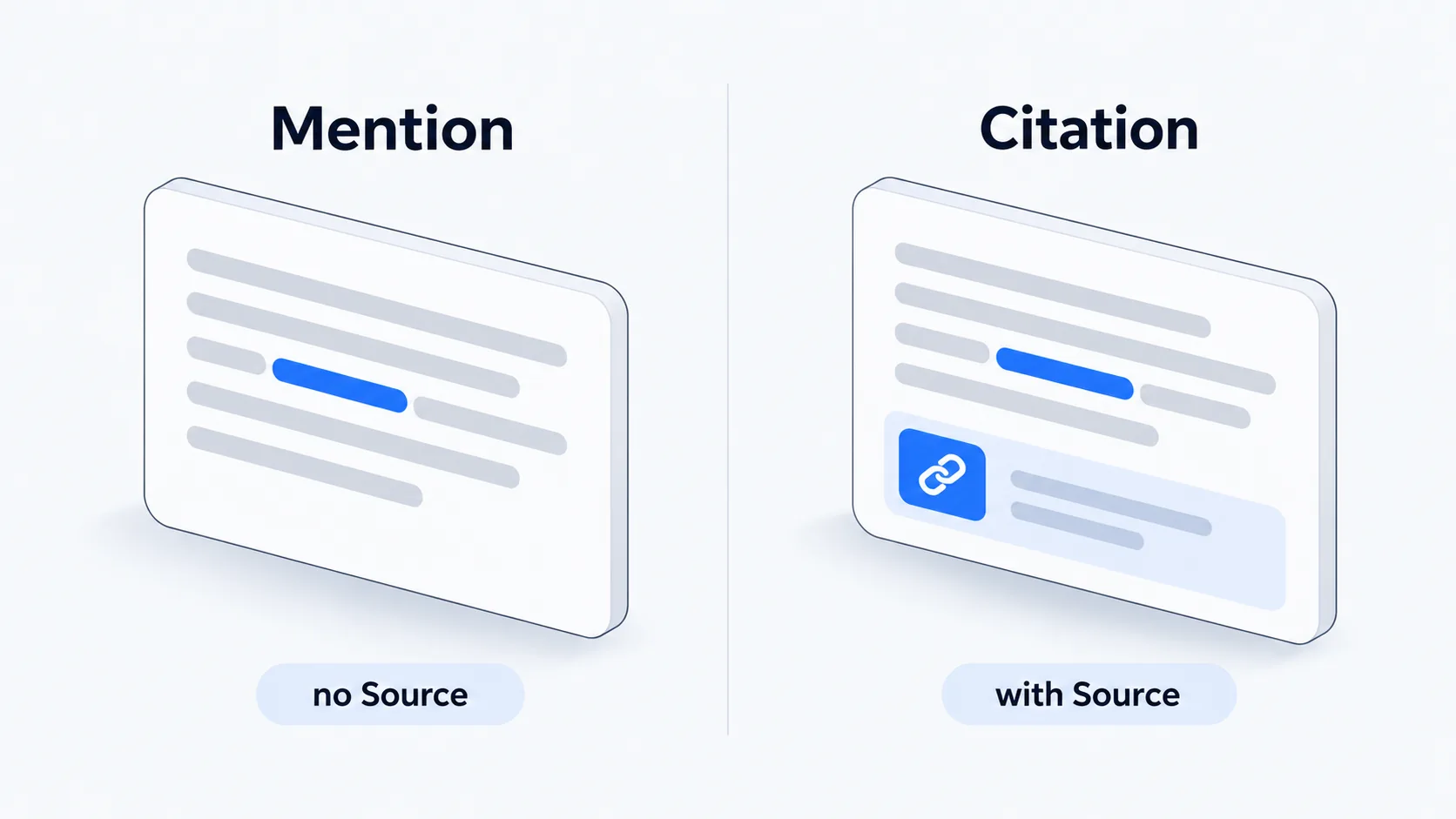
- ucited.ai distinguishes cleanly between a brand mention and an actual source citation, and reports the citation signal only where it is semantically reliable.
- AI assistants cite sparsely on this question. Most answers to a "how do I write…" question carry no link at all, which raises the value of each citation that does appear.
For the German version of the question, the top cited domains were help.openai.com, openai.com and developers.google.com (analysis of ucited citation data, as of September 2026). Official documentation from the model providers competes with content marketing here.
How to check whether the format works
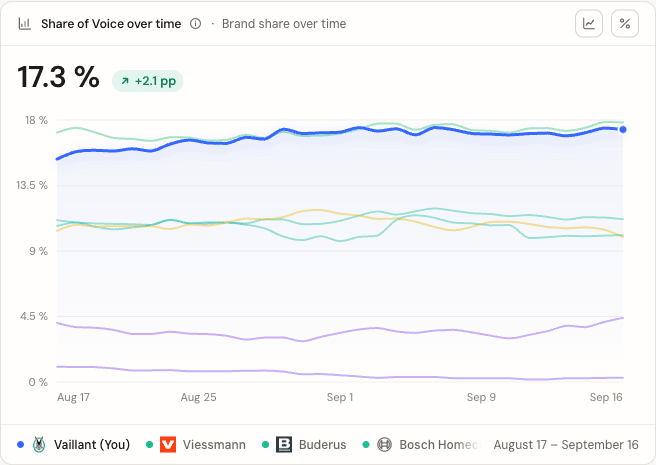
You verify whether a comparison article is cited by tracking, per prompt and per model, whether the target URL appears in the answer's sources over time. A citation monitoring tool like ucited.ai runs a fixed set of prompts against ChatGPT, Perplexity, Google AI Overviews and other assistants on a schedule, records which domains are cited and calculates citation share of voice against competitors. Without a baseline before the rewrite, a change in citations cannot be attributed to the format.
A minimal measurement setup:
- Define the prompts that a reader would actually type, in every language your article targets. Include the "best tools" phrasing and the "X vs Y" phrasing separately.
- Record a baseline of cited domains and your own citation count for at least a few weeks before publishing the rewrite.
- Publish the answer-block version and keep the URL stable.
- Compare citation frequency and citation share of voice per model after the change. Only interpret the "cited" flag for models where it is semantically valid.
Adding answer blocks is a measure whose effect is backed by experimental literature rather than by confirmed per-page results. Treat it as a working hypothesis, not a guaranteed outcome.
Frequently asked questions
How long should an answer block be?
An answer block should be two to four sentences that fully answer the question implied by the heading, without relying on the preceding text. Shorter than two sentences usually omits the differentiator; longer than four sentences increases the chance of truncation or paraphrase.
Should the verdict come first or last in a comparison article?
The verdict should come first, directly under the H1 or first H2. AI assistants extract the passage that answers the query most directly, and a verdict buried at the end of a long page is less likely to be selected than one at the top.
Do comparison tables help with AI citations?
Comparison tables help as a supplement but do not replace answer blocks. Tables are readable by AI systems, yet a table cell rarely forms a quotable sentence. Keep the table, and make sure every tool also has a prose answer block.
Do I need schema markup for a listicle to be cited?
Structured data may help AI systems understand the page type, but whether it increases citation frequency for listicles specifically is not established. Treat schema as hygiene, not as the lever.
How do I know if my comparison article is being cited by ChatGPT or Perplexity?
You know by monitoring a defined set of prompts across AI assistants and recording which URLs appear as sources over time. ucited.ai does this as a SaaS service, with per-model citation tracking, citation share of voice against competitors and an analysis of which competing domains are cited instead of yours.
How often should a best-of list be updated?
A best-of list should be re-checked whenever a listed tool changes materially, and the visible update date should reflect the real review date. Do not display a fresh date without a real review; if the content is not re-verified, the date is misleading.