
Citation Gaps
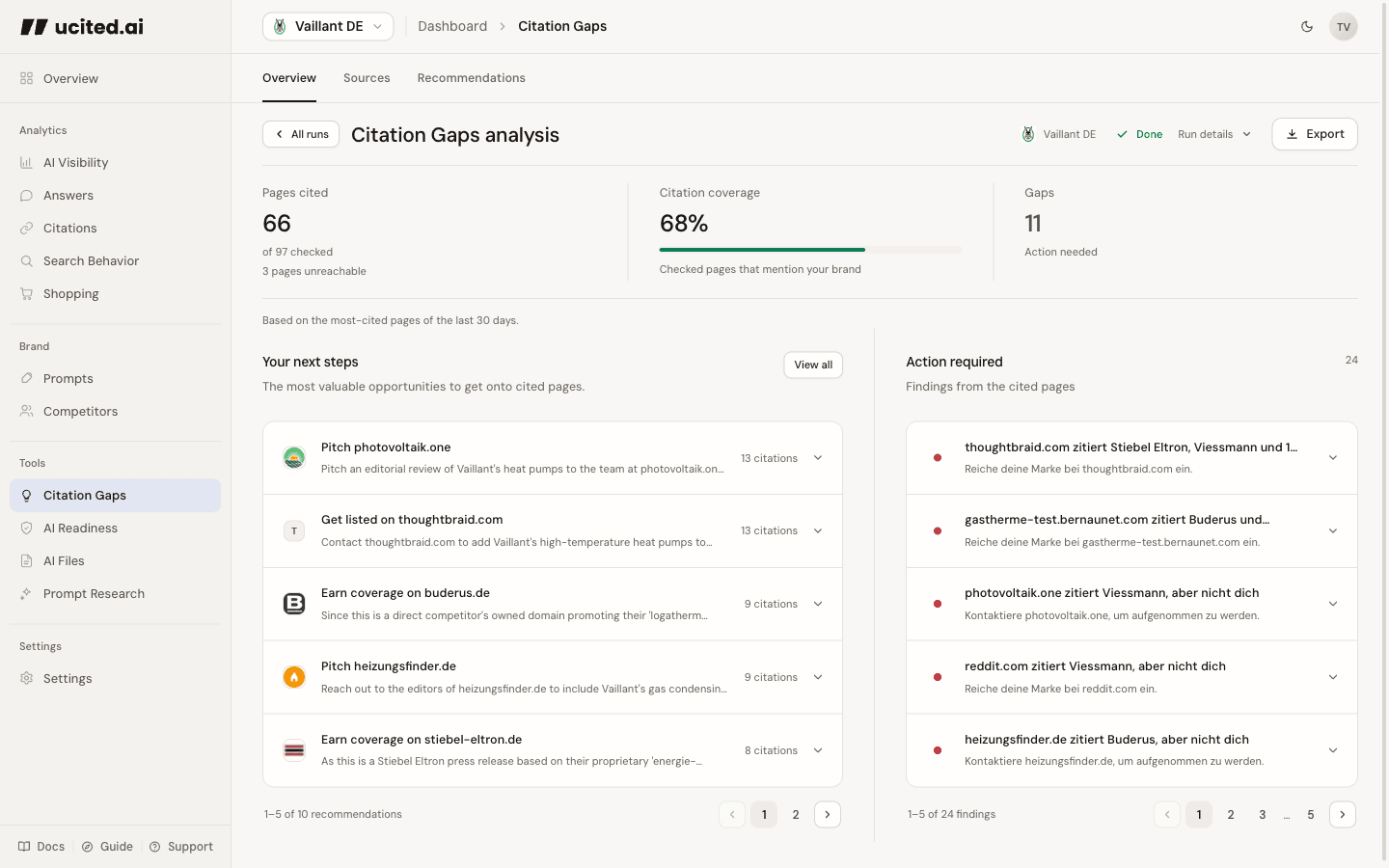
Find where your brand is missing.
AI answers link to comparisons and recommendations. Check which of those pages mention competitors but leave your brand out.
- Start with external sources captured in your tracking.
- Review brand mentions alongside the evidence.
- Use recommendations to approach relevant publishers.
30 credits per analysis. Your client needs captured citations to get started.
A comparison without your brand.
Which smartphones take the best photos?
Check whether your product fits the comparison. Share relevant camera specifications with the editor.
Prompt Research
Ask the questions that matter.
Turn your topic into specific questions to track, from early research to comparisons between competing products.
- Enter a topic and choose your market.
- Review suggestions for relevance to your offering.
- Add the questions you choose directly to tracking.
2 credits per research run. Suggestions are not measured search volumes; tracking runs are charged separately.
Choose relevant questions to track
Which smartphone takes good photos at night?
iPhone or Galaxy for travel videos?
Which camera fits my budget?
AI Readiness
Make your page easier to understand.
Find what makes your website harder to access or interpret, and which improvements your team can work on next.
- Check a URL’s accessibility, structure and content.
- Review findings backed by specific evidence.
- Discuss recommendations with your content or development team.
8 credits per audit. The score assesses your page, not its probability of ranking.
Access & indexability
Can the page be fetched?
Structure & content
Is the important information visible?
Finding → recommendation
What should your team check next?
AI Files
Your content. Clearly presented.
Turn your website into drafts for llms.txt, llms-full.txt and a facts page with key information about your business.
- Collect relevant content from your website.
- Check the drafts against your original sources.
- Download the files and publish them yourself.
15 credits for the bundle. The files do not guarantee use by AI providers.
llms.txt
Website · Summary · Links
Products & services
Documentation & guides
Further reading
Review → download → publish
Keep the whole picture in view.
AI Visibility Tracker
Measure whether and how AI models mention your brand.
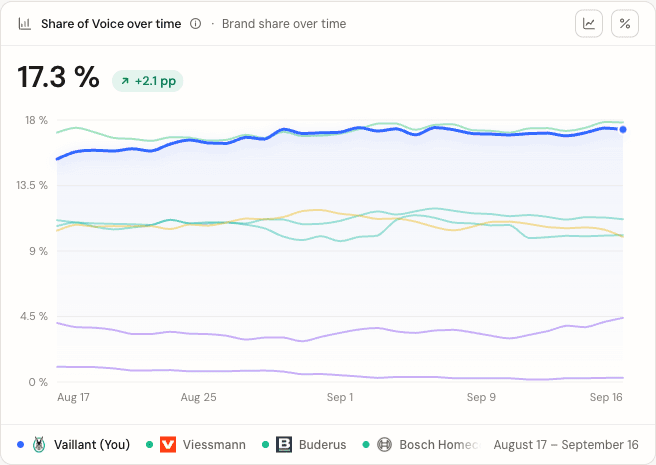
Share of Voice
Compare your visibility with competitors over time.
Citations
Understand the sources behind the answers.
Search Behavior
See the web searches captured before an answer.
Shopping
See products and their positions in ChatGPT recommendations.
Getting started
Set up your brand, markets and prompts for your first measurement.