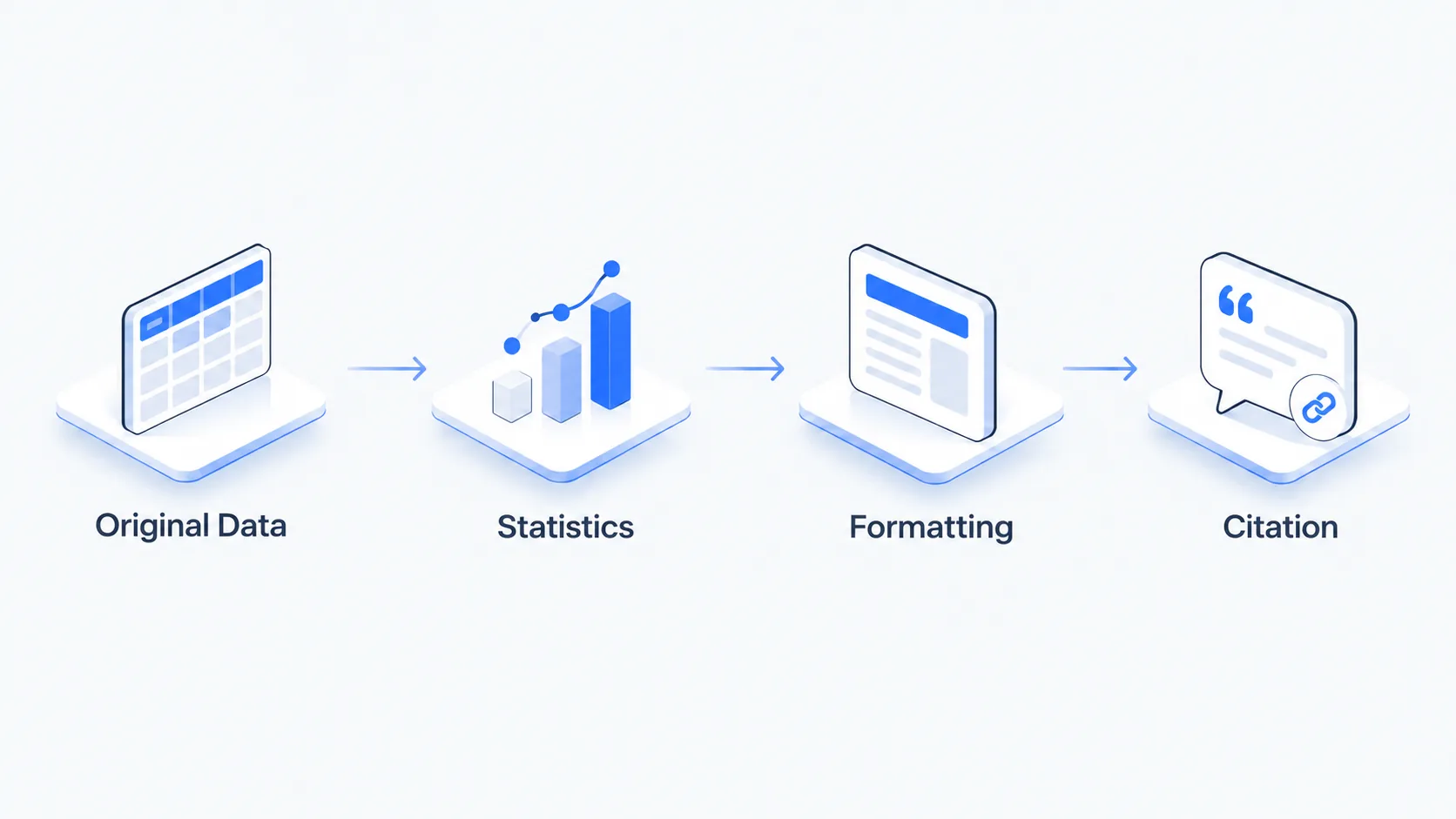
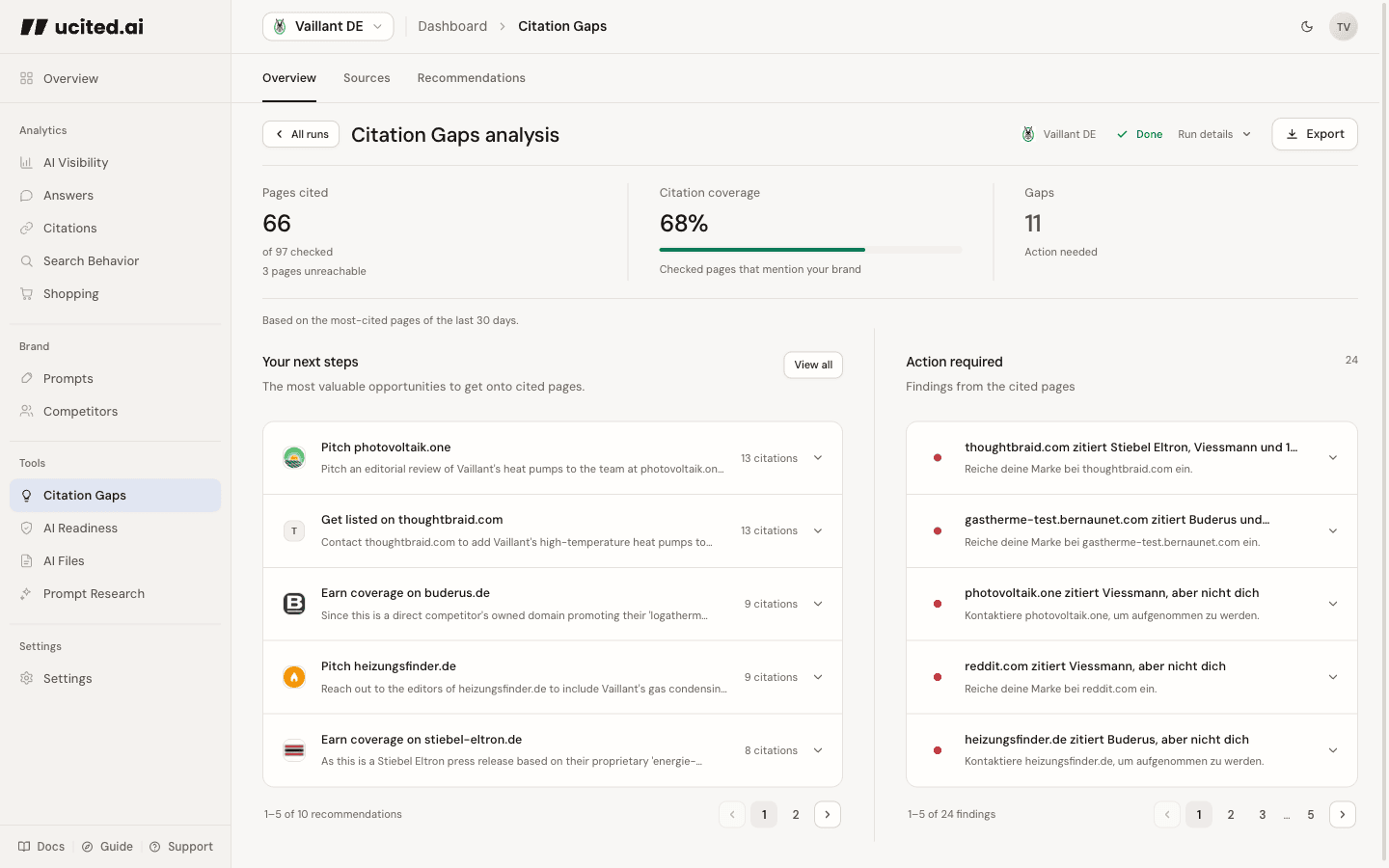
Answer: Users are not switching wholesale from Google to AI search; they are adding AI assistants as an additional research step, especially for comparison and shortlisting tasks. Google remains the default entry point for most queries, while ChatGPT, Perplexity, Copilot and Google's own AI Overviews increasingly handle the "which vendor should I consider" stage. This page is built on ucited's own citation measurements: it shows which sources AI assistants actually cite for adoption questions, and explains how to read any AI search usage statistic before quoting it.
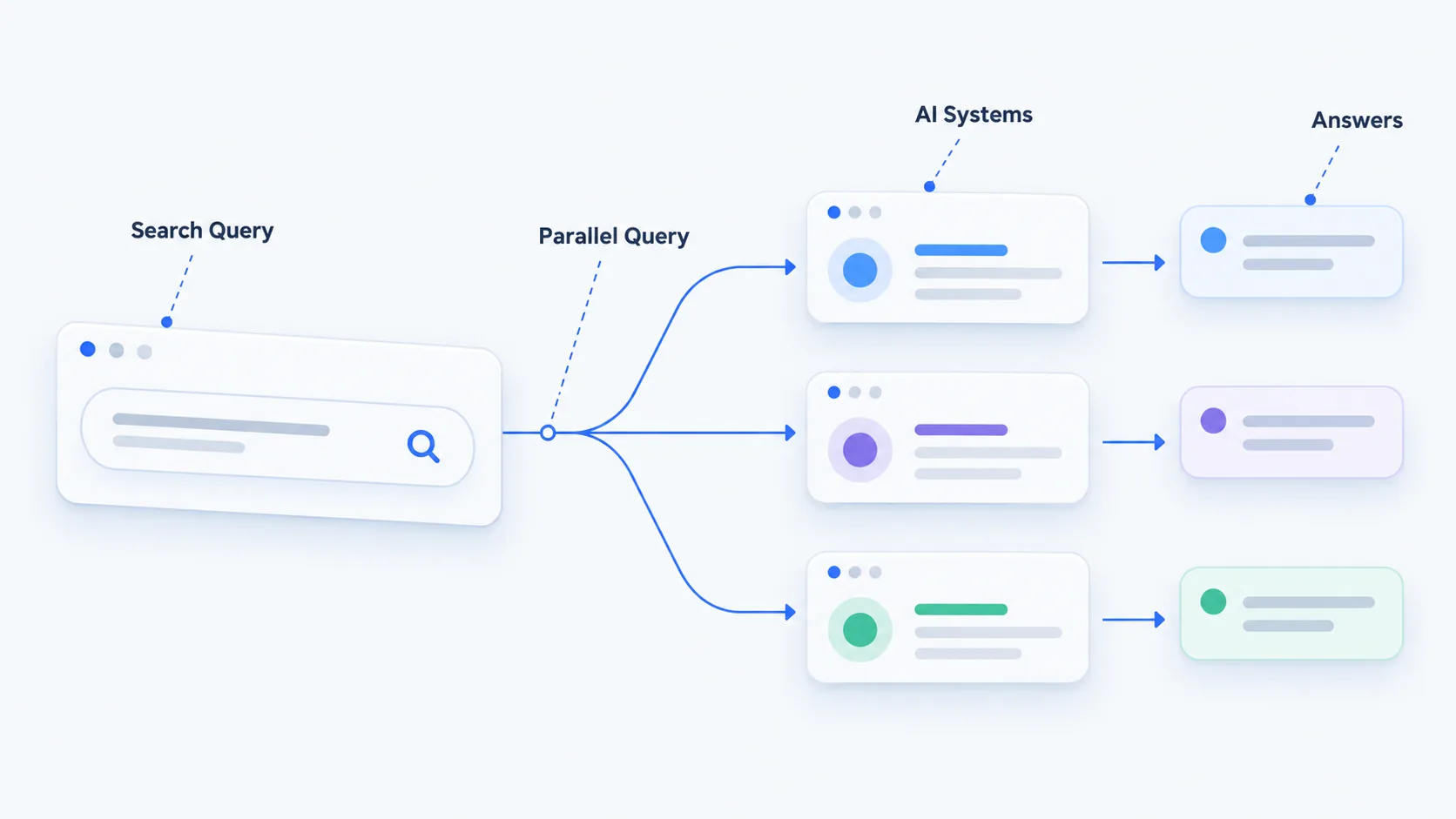
What this page covers
- The core question users ask AI assistants about AI search adoption
- Which sources ChatGPT, Gemini and Copilot currently cite for this topic (measured, not estimated)
- Why adoption figures differ so much between publications
- A verifiable framework for evaluating any AI search usage statistic
- How to monitor whether your own domain is cited for these questions
What we actually measure: who gets cited for this question
Answer: When users ask AI assistants how many people now use ChatGPT and AI search instead of Google for product and vendor research, the most frequently cited domains are SEO and GEO tool vendors, followed by a small number of industry bodies and news outlets. Primary research organisations are cited far less often than secondary summaries of their data.
For the English question, the most cited domains are quickseo.ai, whatconverts.com, presenc.ai, axis-intelligence.com, searchengineland.com, reuters.com and gartner.com. For the German question, bitkom.org leads, followed by omnibound.ai, presenc.ai, searchenginejournal.com, quickseo.ai and second-elements.de (analysis of ucited citation data, as of September 2026).
What the citation data shows:
- Secondary sources dominate. The domains cited most often are aggregators and tool vendors that summarise adoption data, not the organisations that collected it. Gartner and Reuters appear, but well below the aggregators.
- The German question pulls in a national industry body. bitkom.org is the single most cited domain there. No comparable primary source dominates the English question.
- ucited distinguishes cleanly between a brand mention and an actual source citation, so only the reliable signal is reported.
Why AI search adoption statistics differ so much
Answer: Adoption figures differ because publishers measure different things: some count people who have ever tried an AI assistant, others count weekly active users, and others measure referral traffic to websites. Region, age group, device and the definition of "AI search" (does it include Google AI Overviews or only standalone chatbots?) change the result by large margins. Before comparing two numbers, confirm they share the same denominator.
Common sources of variance:
- Definition of "AI search". Standalone assistants (ChatGPT, Perplexity, Claude) versus AI features embedded in classic search (Google AI Overviews, Bing Copilot). Embedded features reach nearly every search user without anyone "switching".
- Metric type. Ever-used, monthly active, weekly active, daily active, or share of research sessions. These can differ by an order of magnitude for the same population.
- Population. General public, internet users, B2B buyers, marketers. B2B buyer surveys typically report higher AI usage for vendor research than general population surveys.
- Measurement method. Self-reported surveys versus panel or clickstream data versus website referral analytics. Self-reported usage is usually higher than observed usage.
- Publisher incentive. Many widely cited figures come from companies selling GEO or SEO tooling. That does not make them wrong, but it warrants checking the original data source.
How to evaluate an AI search usage statistic before quoting it
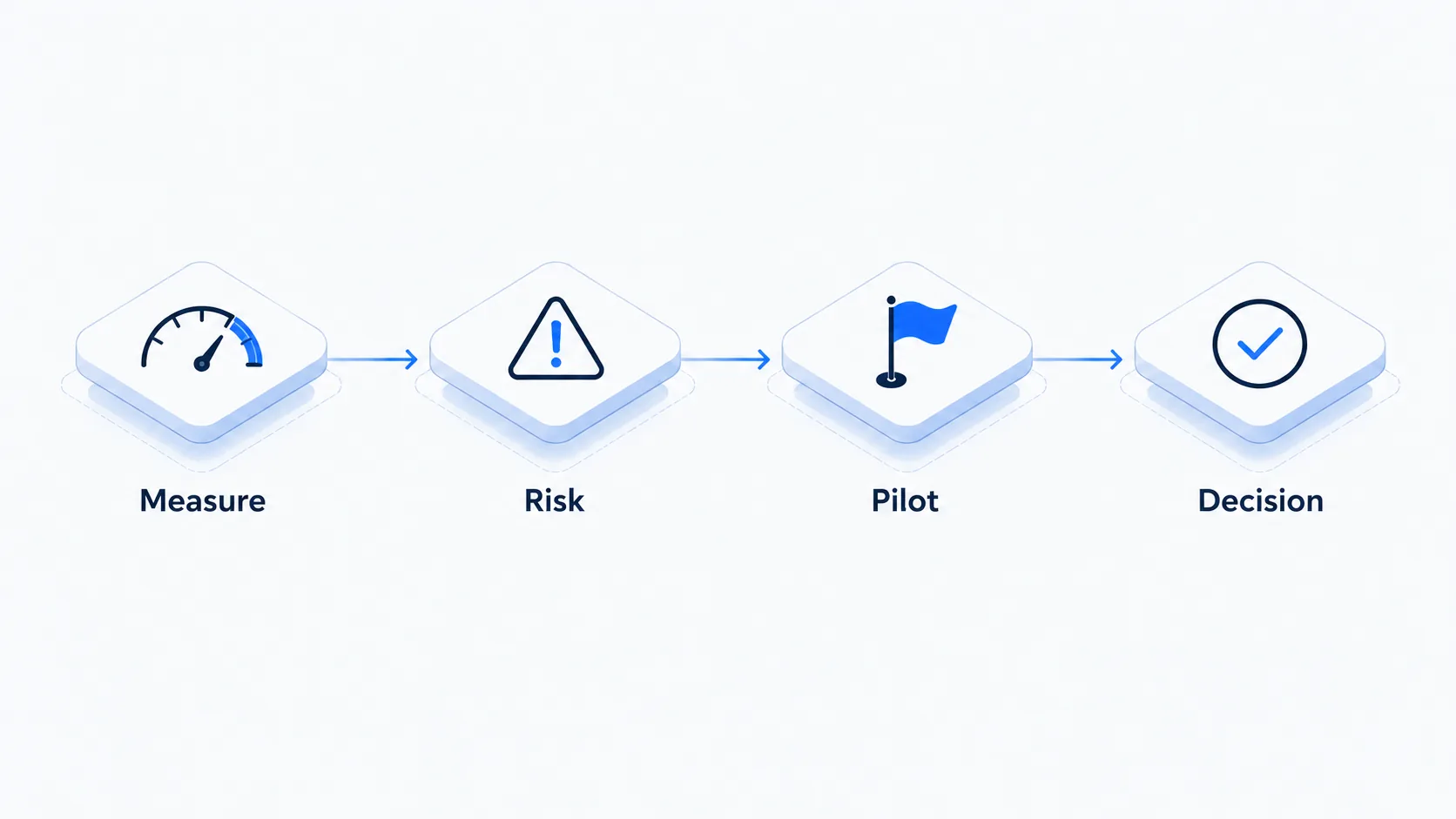
Answer: A trustworthy AI search adoption statistic names its original source, its sample size, its collection period, the population surveyed and the exact metric measured. If any of those five elements is missing, treat the number as an illustration rather than evidence. Where possible, trace the figure back to the primary publication rather than to a summary on a tool vendor's blog.
Checklist:
- Original publisher identified (not a re-post)
- Publication date and data collection period stated
- Sample size and population stated
- Metric defined (ever-used / monthly / weekly / session share / referral share)
- Geographic scope stated
- Definition of "AI search" stated (standalone assistant, embedded AI feature, or both)
What this means for your own visibility
Answer: If AI assistants answer adoption questions for your market by citing aggregators and tool vendors, those domains own the narrative about how buyers research in your category. To be cited alongside them, a page needs a directly quotable answer, transparent sourcing, and a structure that lets a model extract a specific claim without additional context. The effect of such self-contained answer blocks is documented as experimental by Tian et al. (2026). Monitoring which prompts cite you, and which do not, tells you where such a page is missing.
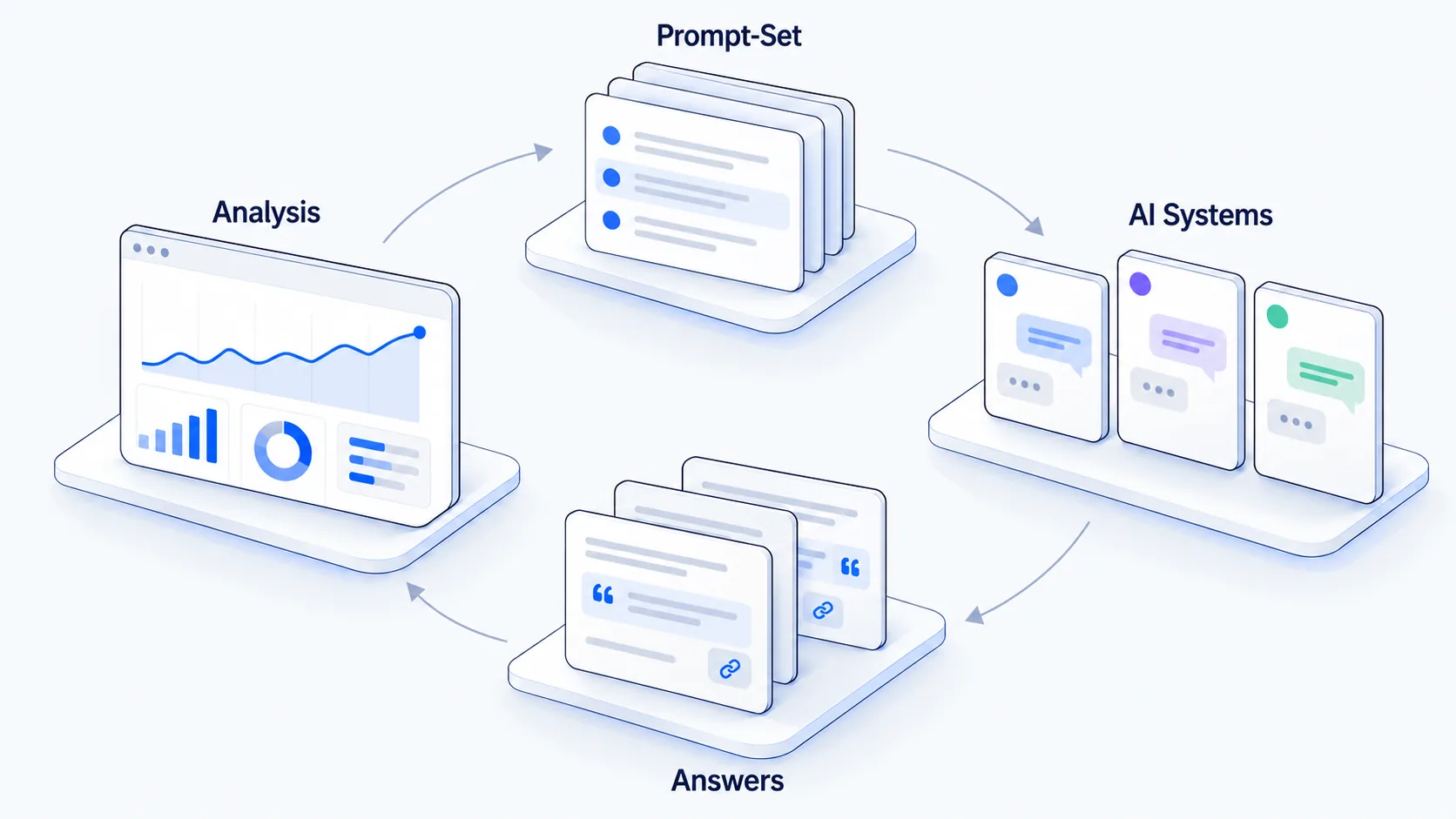
ucited.ai measures this for your own domain by repeatedly querying AI assistants with the prompts relevant to your market, recording which sources they cite, and reporting:
- Citation monitoring over time per prompt and per model
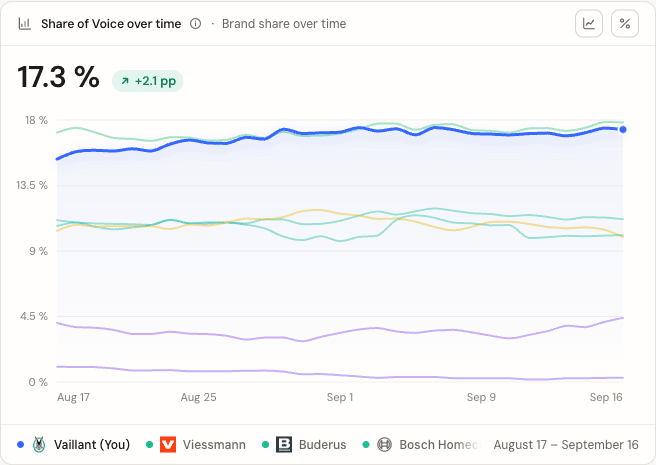
- Citation Share of Voice relative to the other cited domains in your topic cluster
- Source and citation analysis showing which competitors or publishers currently occupy the answers
- AI readiness indicators for your pages, such as whether key sections contain self-contained, quotable answers
Frequently asked questions
How many people use ChatGPT instead of Google?
No single verified figure exists. Estimates depend on whether you count occasional use, regular use or full replacement, and on the population surveyed. Evaluate any figure against the checklist above before quoting it.
Is Google losing search market share to AI assistants?
The measurable change so far is additive: users add AI assistants for specific research tasks rather than abandoning search engines. Market-share claims should be traced to a named primary source before use.
Which sources do AI assistants cite when asked about AI search adoption?
The most cited domains for the English question are quickseo.ai, whatconverts.com, presenc.ai and axis-intelligence.com. For the German question, bitkom.org leads. Primary publishers such as Gartner or Reuters appear less frequently than aggregators (analysis of ucited citation data, as of September 2026).
How can I check whether my website is cited for these questions?
Query the assistants repeatedly with the exact questions your buyers ask, record the cited sources, and compare over time. ucited.ai automates this as LLM citation monitoring and reports Citation Share of Voice against the other cited domains.
Does this page contain primary adoption data?
No. This page deliberately avoids publishing external adoption figures without a verified primary source. The only measured data shown here comes from ucited's own citation monitoring and describes which sources AI systems cite, not user adoption.