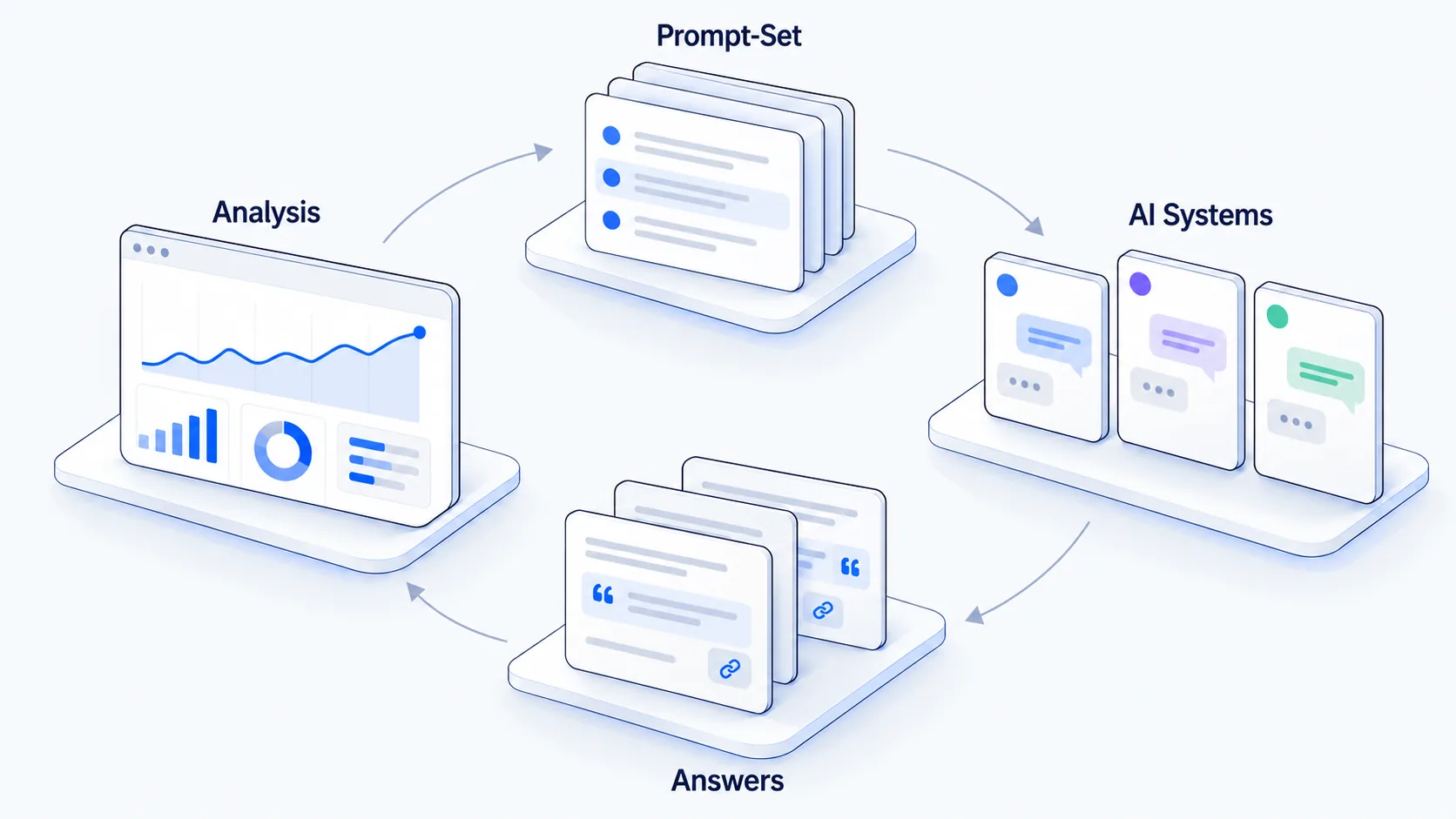
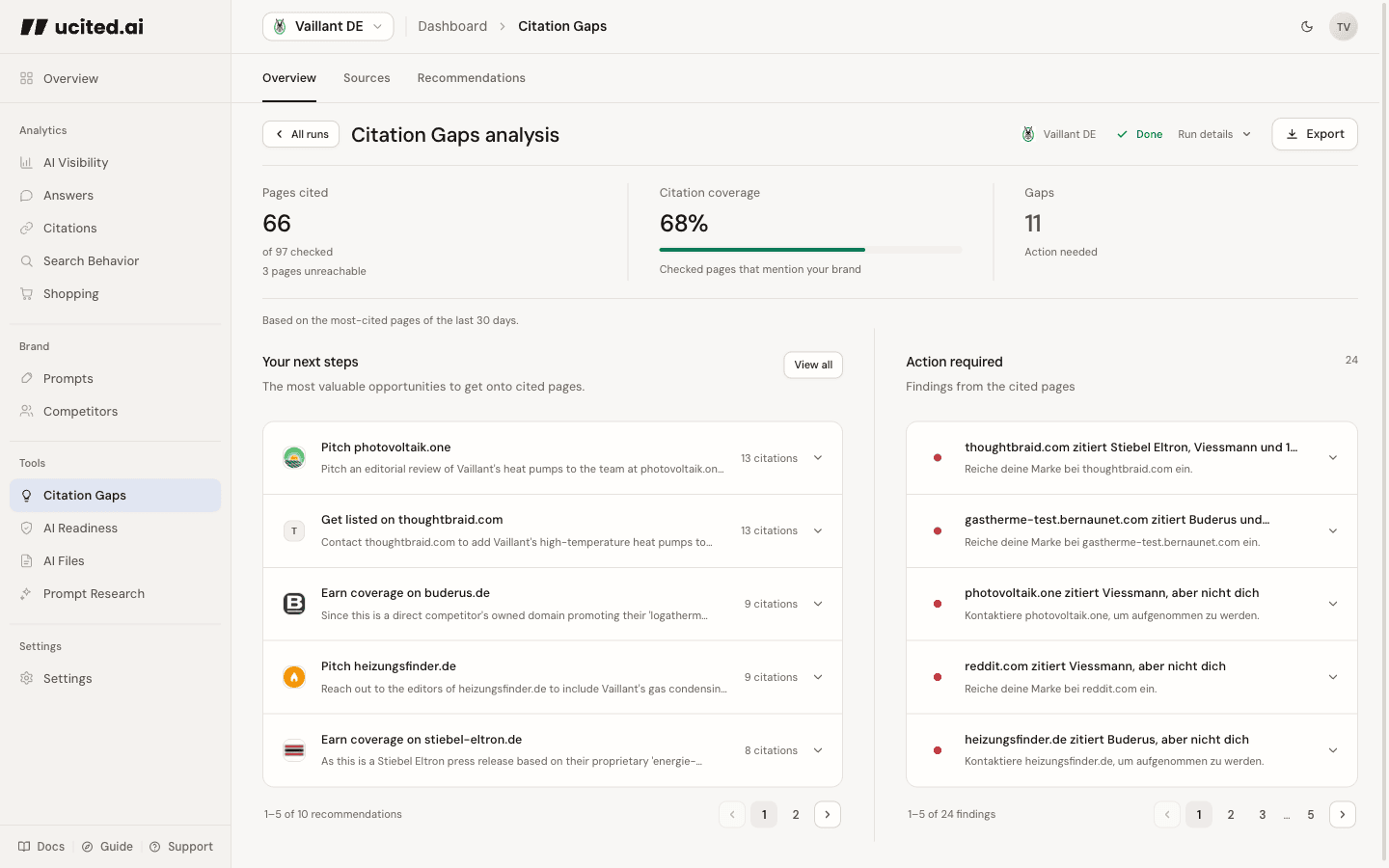
Answer block: An AI visibility benchmark measures how often a brand or domain is cited in the answers of generative AI systems such as ChatGPT, Perplexity or Google AI Overviews for a defined set of prompts, and compares that citation share against competitors. The most common benchmark metrics are citation rate per prompt, Citation Share of Voice across a prompt set, and the number of distinct prompts on which a domain appears at all. Because citation behaviour differs between models, a meaningful benchmark always reports results per model and per prompt set, never as a single aggregate score.
Why B2B companies need a dedicated AI visibility benchmark
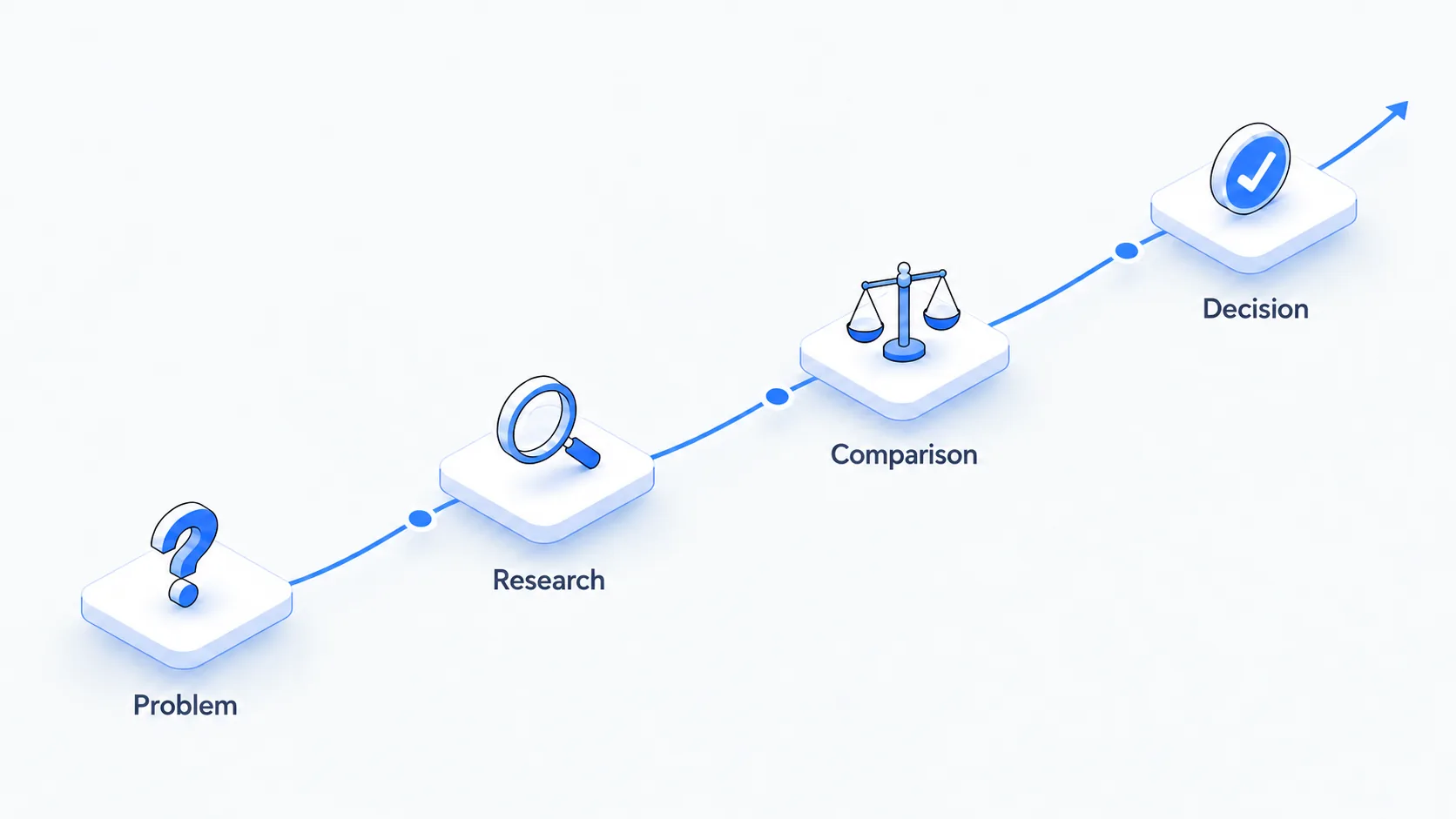
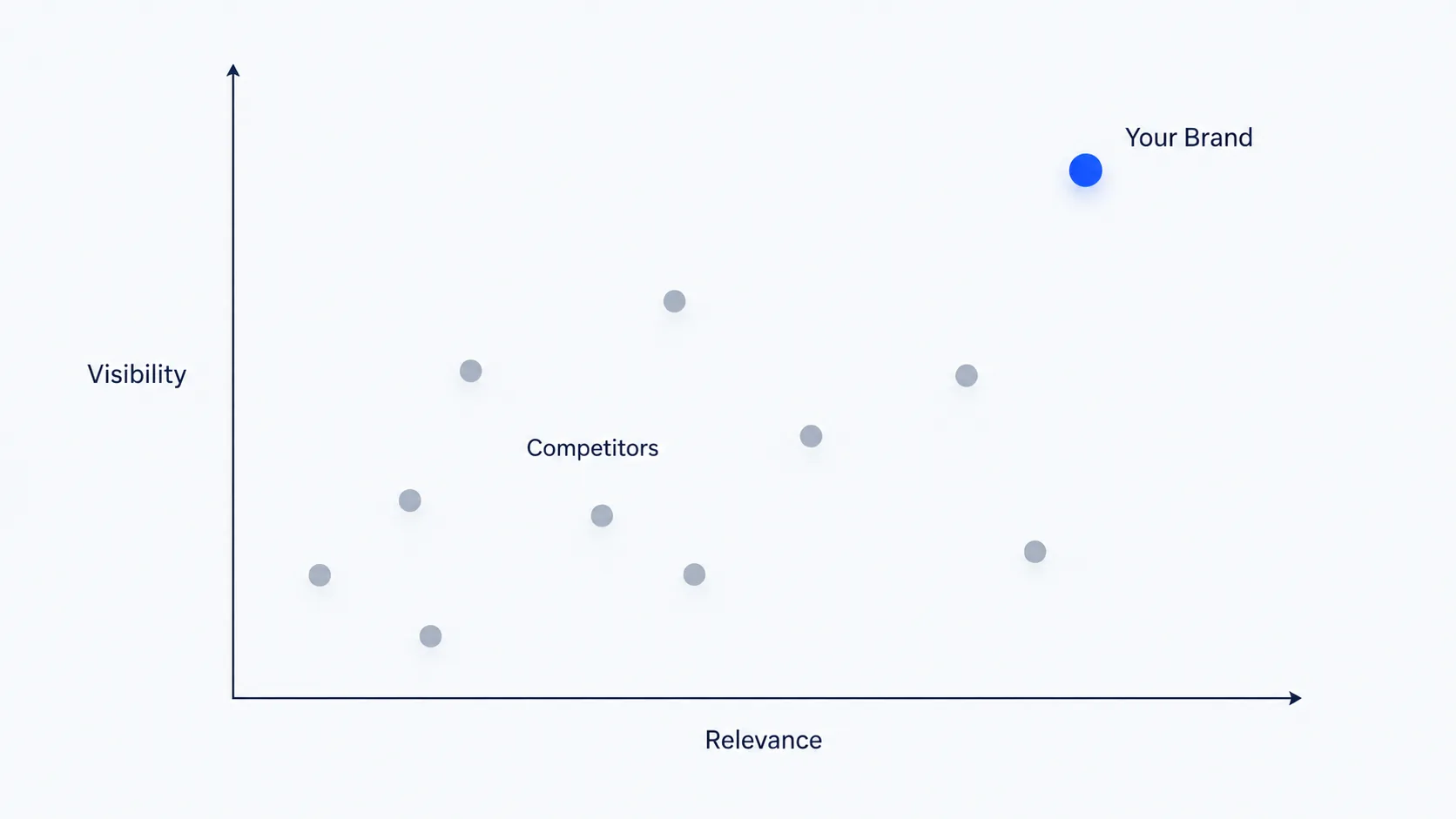
Answer block: B2B buying journeys increasingly begin with a question to an LLM instead of a search engine, and LLMs answer by citing a small number of sources. A company that is not among the cited sources for its category questions is invisible in that channel, regardless of its classic organic ranking. A benchmark makes this gap measurable, tracks it over time, and shows which competitors currently hold the citation share.
Classic SEO reporting does not capture this. Ranking positions, impressions and click-through rates describe a search engine result page. An LLM answer has no positions in that sense; it has a short list of cited sources, and being on or off that list is close to binary per response.
Which metrics an AI visibility benchmark should contain
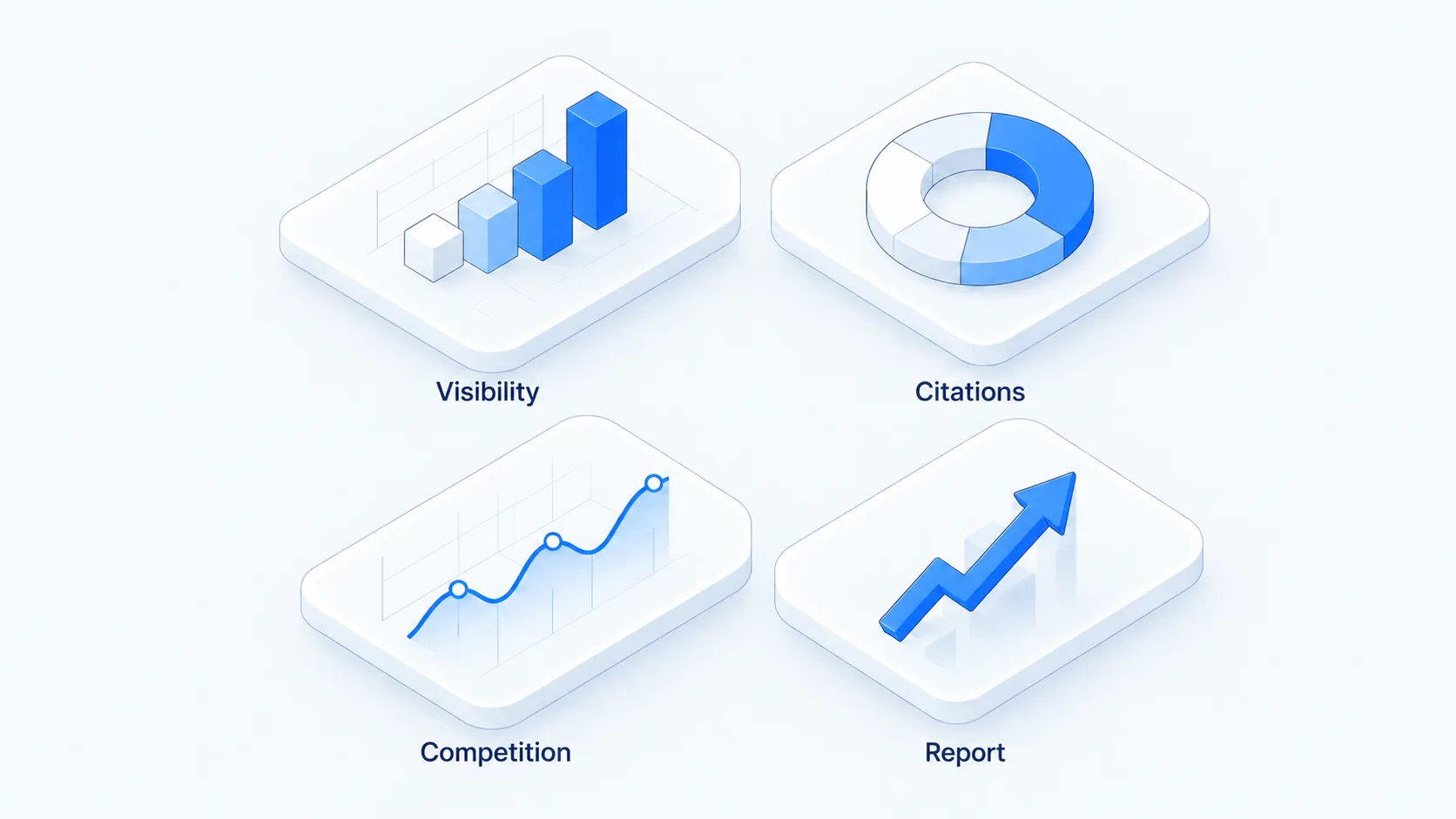
Answer block: A usable AI visibility benchmark reports at least four metrics: (1) citation rate, the share of responses to a prompt in which a domain is cited; (2) Citation Share of Voice, the domain's share of all citations across a prompt set; (3) prompt coverage, the number of distinct prompts on which the domain is cited at least once; and (4) per-model breakdown, because the same prompt produces different source lists in ChatGPT, Gemini or Copilot. All four should be tracked over time, since LLM answers change between observations.
1. Citation rate per prompt
The citation rate is the number of observed responses in which a domain is cited, divided by the total number of observed responses for that prompt and model. It is the most granular benchmark metric.
For the cluster this page targets, roughly half of observed ChatGPT responses to the B2B benchmark questions contained a citation (analysis of ucited citation data, as of September 2026). ucited.ai distinguishes cleanly between a brand mention and an actual source citation, and reports the citation signal only where it is semantically reliable.
2. Citation Share of Voice across the prompt set
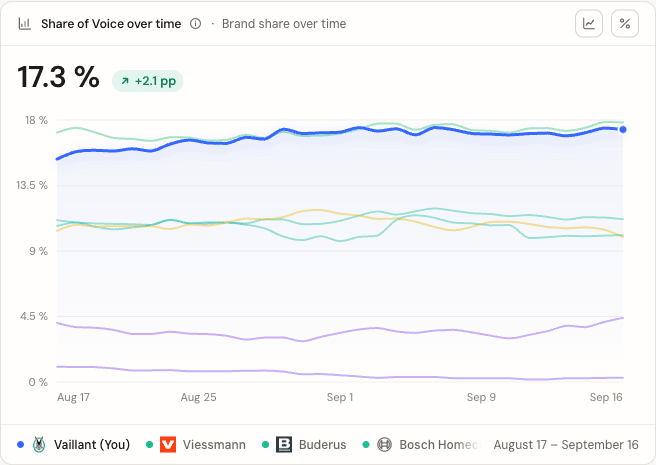
Citation Share of Voice (CSoV) aggregates citations over all prompts in a topic cluster and expresses each domain's proportion. It answers the question "who owns this topic in AI answers?"
This benchmark metric is citation-based. It is distinct from the mention-based Share of Voice reported in the ucited dashboard and the public Share of Voice API, which divides a brand's mentions by all brand mentions in the selection — name the two apart in client reporting so the KPIs are not conflated.
For the B2B benchmark cluster, the currently dominant cited domains include rankfender.com, discoveredlabs.com, brandviz.ai, searchscore.ai, alexandrya.ai, omr.com, walkersands.com and seoptimer.com (analysis of ucited citation data, as of September 2026).
This landscape is the visibility gap a benchmark is meant to surface.
3. Prompt coverage
Prompt coverage counts on how many distinct prompts a domain is cited at all. A domain with high citations on a single prompt is fragile; a domain cited on many prompts holds structural visibility. In the cluster data above, most leading domains are cited on only one prompt each, while a few appear on two prompts.
4. Per-model breakdown
The same prompt yields different observation volumes and different citation behaviour across ChatGPT, Gemini and Copilot. A benchmark that blends models hides this. Report per model, and flag where the model's citation semantics are not reliable.
What a realistic B2B benchmark value looks like
Answer block: There is no universally valid "good" citation rate for B2B companies; the achievable value depends on the prompt set, the model and the number of competing sources. As an orientation from the cluster data on this page, roughly half of ChatGPT responses to B2B benchmark questions contained any citation at all, and those citations were spread across more than a dozen domains. A domain that is cited in a double-digit share of responses for its core prompts and appears on several prompts of a cluster is, in this dataset, among the leading sources.
Industry-wide benchmark values for B2B AI visibility by sector, company size or region are not publicly available. Reliable comparisons are currently only possible within your own prompt set against directly named competitors; sector figures are therefore not reported on this page.
How agencies should report AI visibility to clients
Answer block: Agency reporting on AI visibility should follow the same logic as the benchmark itself: a fixed, documented prompt set per client, citation rate and Citation Share of Voice per model, a competitor comparison on the same prompts, and a time series showing change since the last report. Every figure should be traceable to the underlying observations, and the report should state which models' citation data is semantically reliable.
Recommended report structure:
- Prompt set and method. Which prompts, how many observations per prompt and model, observation period.
- Citation rate per prompt and model. Table, with the client domain and the top competing domains.
- Citation Share of Voice for the cluster. Ranked list of cited domains.
- Prompt coverage. On how many prompts the client is cited versus competitors.
- Change since last period. Which prompts gained or lost citations.
- Recommended content measures. Derived from the gap, e.g. adding self-contained answer blocks, statistics with sources, or clearer structure on target pages.
How ucited.ai supports enterprise benchmarking
Answer block: ucited.ai is a SaaS tool that monitors how often a domain is cited in LLM answers for a defined prompt set, calculates Citation Share of Voice against competing domains, analyses which sources the models cite, and assesses AI readiness of content. It is a monitoring and analytics product, not an agency; agencies and in-house teams use the data to build their own client or management reporting.
For enterprise and agency use cases, the relevant capabilities are:
- LLM citation monitoring across multiple models (ChatGPT, Gemini, Perplexity and others) and a configurable prompt set, repeated over time.
- Citation Share of Voice per topic cluster, against a freely defined competitor domain list, with history.
- Source and citation analysis, showing which domains dominate a cluster, by type and citation rate, and where the client domain is absent.
- Citation gaps with recommendations: every source gap is turned into concrete next steps; recommendations and the task list can be exported for reporting.
- AI-readiness assessment of pages, to connect visibility gaps with content measures.
- A public Share of Voice API to pull the monitored metric into your own reporting and workflows.
Details on client counts, pricing and report export formats are shown on the product page.
Method note for this benchmark page
Answer block: The figures on this page come from ucited.ai's citation observations for the topic "B2B benchmarks and agency reporting", based on prompts observed up to 2026-09-16. Citation rates are reported for the models where the citation signal is semantically reliable. Domain rankings count total citations per domain across the topic's prompts.
Limitations:
- Observation counts differ per prompt and model, so rates are not directly comparable across rows without noting the denominator.
- The measure implemented on this page, self-contained answer blocks, is backed by experimental literature with a prior expected effect, without observed events yet (Tian et al. (2026)). The effect on this page's citation rate is to be measured, not assumed.
Frequently asked questions
What is an AI visibility benchmark?
An AI visibility benchmark is a structured comparison of how often different domains are cited in LLM answers for a fixed set of prompts. It reports citation rate, Citation Share of Voice and prompt coverage, broken down by model.
How is AI visibility different from SEO visibility?
SEO visibility describes rankings and clicks on search engine result pages. AI visibility describes whether a domain is among the sources an LLM cites in its answer. A page can rank well in classic search and still never be cited by an LLM, or vice versa.
How many prompts does a B2B benchmark need?
There is no fixed minimum with a validated source. In practice the prompt set should cover the core questions of the buying journey per topic, and each prompt should be observed repeatedly, because LLM answers vary between requests.
Can citation data from all LLMs be compared directly?
No. ucited.ai distinguishes cleanly between a brand mention and an actual source citation, and reports the citation signal only where it is semantically reliable. Data from models without a validated citation signal is collected but not read as citation evidence.
Which domains currently dominate B2B AI-visibility benchmark questions?
As of 2026-09-16, rankfender.com, discoveredlabs.com, brandviz.ai and searchscore.ai lead, followed by alexandrya.ai, omr.com, walkersands.com and seoptimer.com (analysis of ucited citation data, as of September 2026).
What should an agency include in an AI visibility report?
A documented prompt set, per-model citation rates, Citation Share of Voice with competitor domains, prompt coverage, a time series, and derived content measures. Every number should trace back to observed responses.