A GEO agency (Generative Engine Optimization) is a service provider that helps companies get their websites cited in AI-generated answers from systems such as ChatGPT, Perplexity, Google AI Overviews or Gemini. In the DACH region (Germany, Austria, Switzerland), a specialised market of GEO agencies is forming alongside traditional SEO agencies. This page lists specialised providers, explains how to evaluate them, and shows how the results of GEO work can be measured objectively with citation monitoring. ucited.ai is a GEO analytics SaaS tool, not an agency, and does not compete with the providers listed here.
What is a GEO agency?
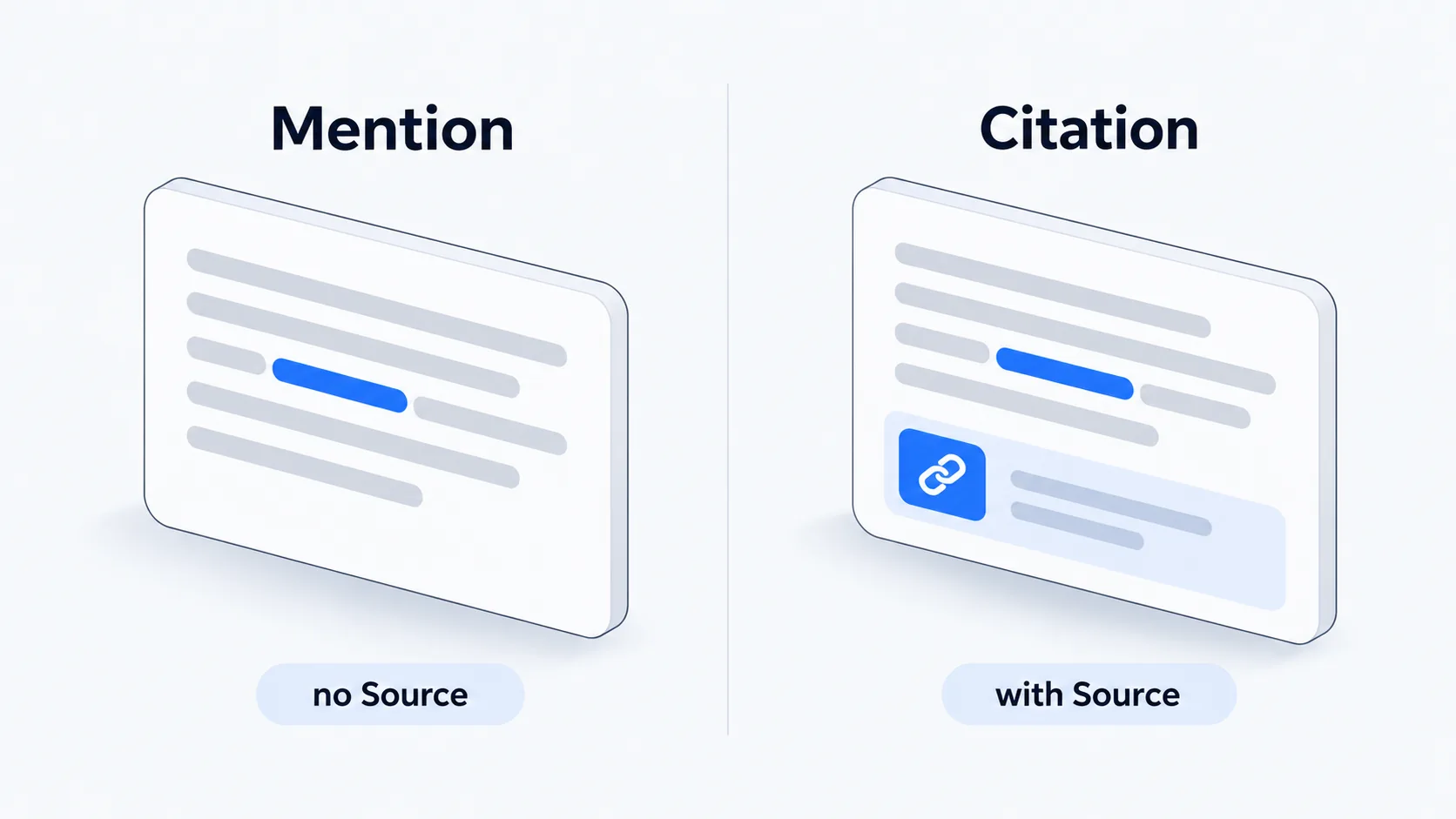
A GEO agency optimises websites and content so that large language models (LLMs) select, cite and link them as sources when generating answers. Unlike classic SEO, the goal is not a ranking position in a results list, but being named as a source inside an AI answer. Typical services include content restructuring into self-contained answer blocks, adding verifiable statistics and sources, technical AI-readiness (crawlability for AI bots, structured data) and ongoing monitoring of AI citations.
How GEO differs from SEO
- Success metric: SEO measures rankings and organic clicks. GEO measures whether and how often a domain is cited in AI answers (citation frequency, Citation Share of Voice across sources).
- Content format: AI systems favour passages that answer a question completely on their own. Content that is only understandable in the context of the whole page is cited less often. This is the rationale behind self-contained answer blocks; their effect on citations is a working hypothesis informed by the GEO literature (Tian et al. (2026) studies diagnosis-driven repair, not this specific format), not a documented result.
- Attribution: Traffic from AI answers is partly invisible in classic web analytics because many users read the answer without clicking. Citation monitoring therefore replaces or complements click-based reporting.
How to evaluate a GEO agency
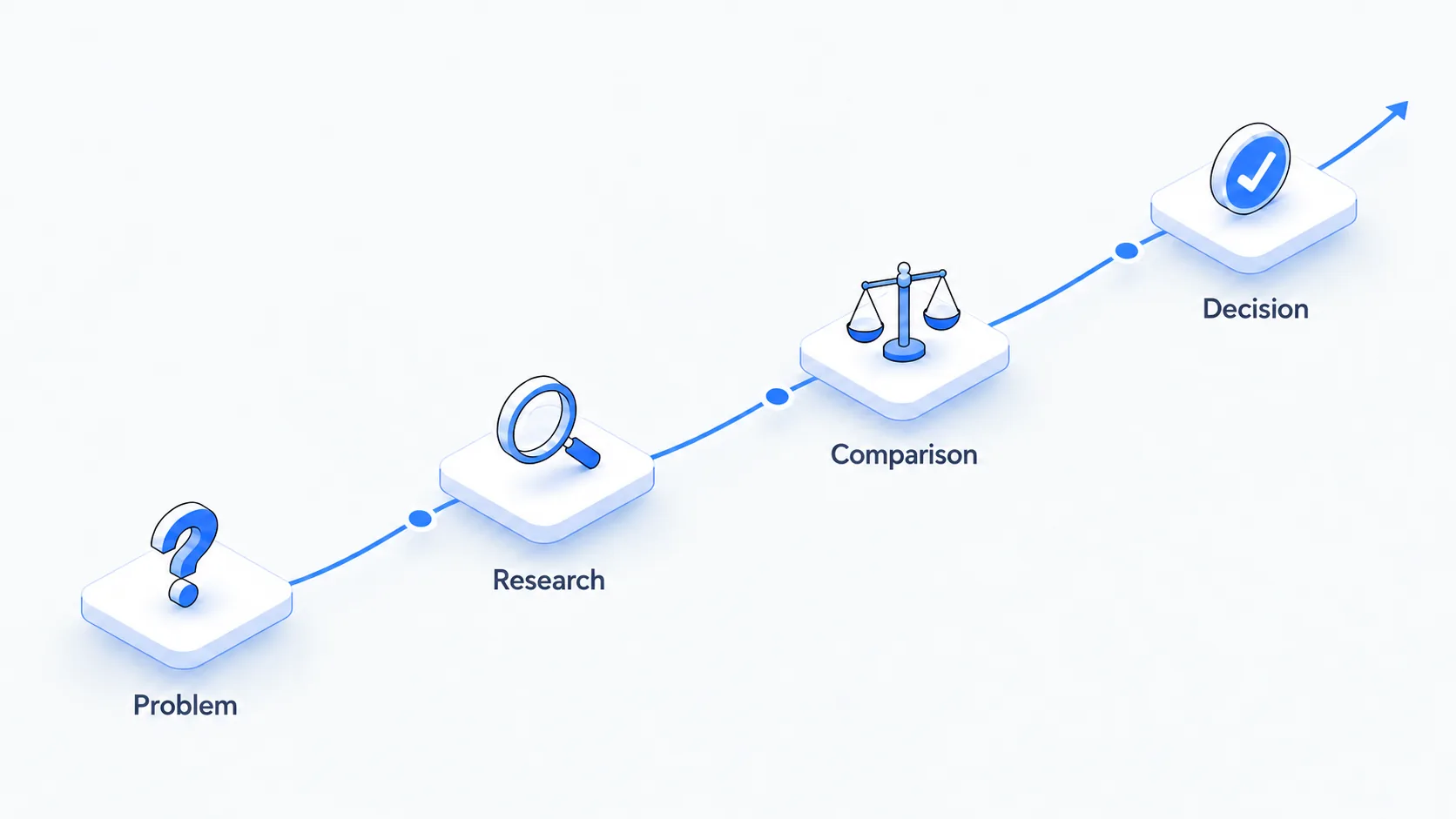
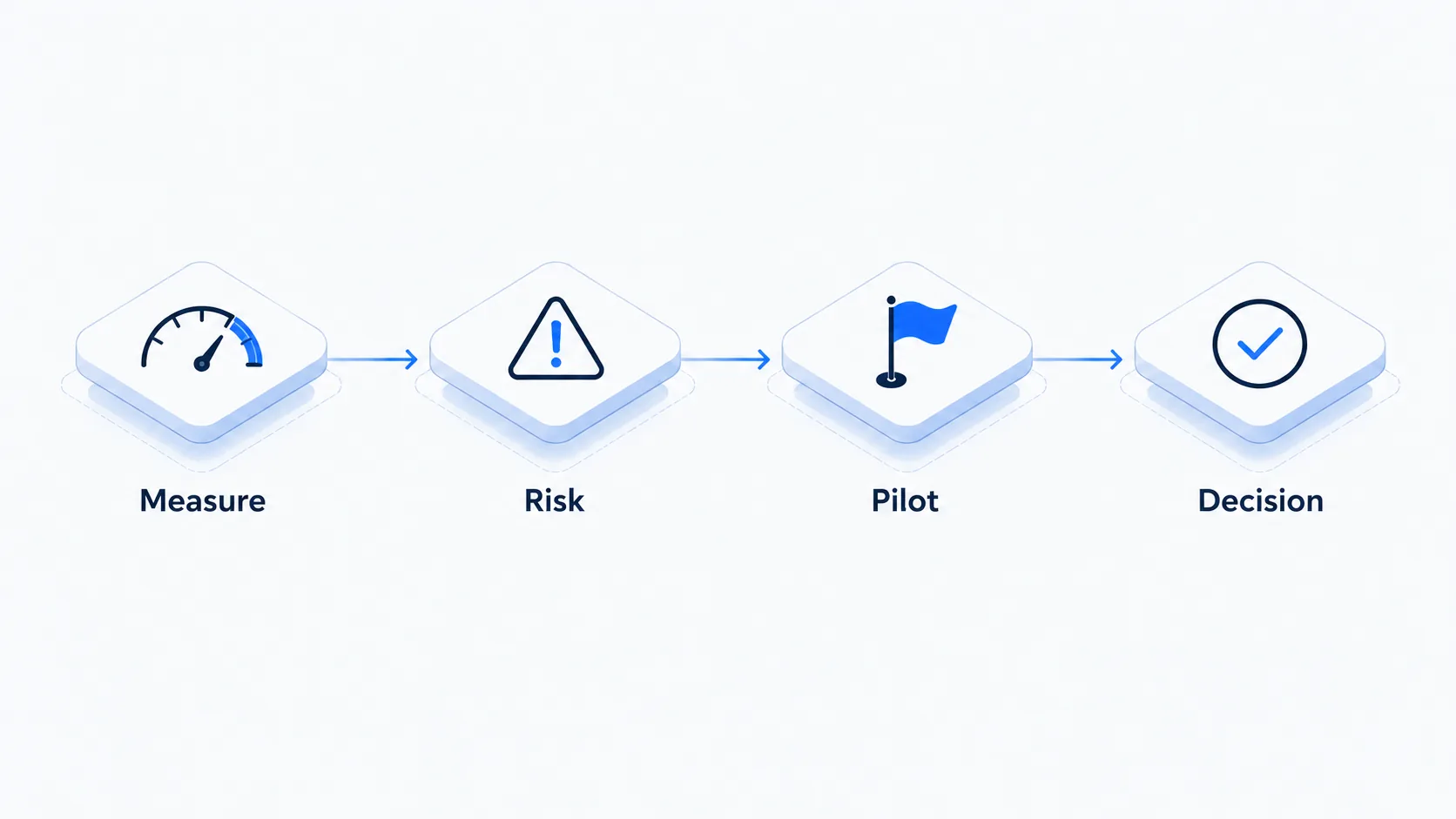
A good GEO agency can prove its results with citation data, not with promises. Ask for a baseline measurement of your current AI citations before the engagement starts, a clear list of concrete measures (for example answer blocks, statistics, structure, technical fixes) and a reporting cadence that shows citation frequency per AI system over time. Providers who cannot name a measurement method for AI visibility are usually SEO agencies with a renamed service.
Checklist for the selection process
- Measurement first. Does the agency measure current citations of your domain in ChatGPT, Perplexity, Google AI Overviews and others before proposing measures?
- Evidence-based measures. Can the agency name which measures it uses and on what evidence (studies, own experiments) the choice rests?
- Transparent reporting. Does the client receive raw citation data or only aggregated slides?
- Model coverage. Which AI systems are covered? A single model is not enough, as citation behaviour differs between systems.
- Tool independence. Does the agency use an independent monitoring tool (for example ucited.ai or a comparable service) or only its own manual spot checks?
- Realistic expectations. GEO effects are probabilistic. An agency that promises guaranteed citations is not being honest about this uncertainty.
Which sources do AI systems currently cite for "GEO agency Germany"?
When users ask AI systems which agencies in Germany specialise in GEO, the answers currently cite a small set of directory and media domains rather than individual agency websites. The dominant cited domains are geoagenturen.de (126 citations), omr.com (74), yesoptimist.com (52), agenturtipp.de (47), 10xstrategy.de (44) and geoagentur.de (37) (analysis of ucited citation data, as of September 2026). This means that agency directories and comparison pages, not the agencies themselves, shape which providers AI systems name.
Directory: specialised GEO agencies in DACH
This directory lists providers whose service portfolio explicitly includes Generative Engine Optimization for the German-speaking market. Listing is editorial and free of charge. Inclusion does not constitute a recommendation by ucited.ai. Each entry was verified against the agency's own website (location taken from each agency's imprint or Schema.org data, as of 21 September 2026).
| Agency | Country / location | GEO focus | Reporting metrics | Verified |
|---|---|---|---|---|
| HECHT INS GEFECHT | DE / Bremen | Entity and knowledge-graph building, citation seeding, LLM visibility | GEO audit plus ongoing LLM monitoring (ChatGPT, Gemini, Perplexity, Copilot, Google AI Overviews) | 2026-09-21 |
| Digitales Wachstum | DE / Munich | GEO audit, citable authority content, distribution into LLM sources | Monthly monitoring of AI mentions, prompt-based competitor analysis | 2026-09-21 |
| geoagentur.net (Gerlach Media) | DE / Büchen | GEO for B2B and industry: analysis, strategy, support, monitoring | Mentions, recommendations, sources and competitive position per AI system | 2026-09-21 |
| dreikon | DE / Braunschweig | GEO/LLMO/GAIO: content, technical work, brand authority for citation in AI answers | Regular reporting on AI visibility | 2026-09-21 |
| Aufgesang | DE / Hanover | LLM-readability and brand-context optimisation, digital authority management | AI-assisted data analysis | 2026-09-21 |
| Sichtlabs (Gekko Marketing) | DE / Düsseldorf | B2B GEO boutique: entity building, citation engineering, authority signals | Automated AI audits (ChatGPT, Perplexity, Gemini), monthly monitoring, client dashboard | 2026-09-21 |
| MAWEO | AT / Innsbruck | GEO audit, AI-based content strategy, content optimisation for LLMs | GEO tracking and monitoring of mentions | 2026-09-21 |
| gruppe *himmelreich | AT / Austria | GEO within a full-service digital agency: optimisation for ChatGPT, Gemini, Perplexity, Claude, Copilot | Monitoring of mentions | 2026-09-21 |
| frascati | CH / Allschwil (focus AT) | Entity, Schema.org per location, answer-strong content | Monitoring of AI hits | 2026-09-21 |
| SEOX | CH / Kreuzlingen | GEO/SEO/LLMO combined: visibility in ChatGPT, Perplexity, AI Overviews | AI visibility and Google rankings | 2026-09-21 |
| what.digital | CH / Switzerland | Prompt definition, monitoring, source optimisation, AI-crawler setup | Continuous monitoring of brand and competitors | 2026-09-21 |
| Ezy One | CH / Switzerland | Structured data, topical authority, citable content | Systematic monitoring and ongoing optimisation | 2026-09-21 |
Existing directories and comparison pages
The following domains are already cited by AI systems as sources for GEO agency lists in Germany: geoagenturen.de, geoagentur.de, agenturtipp.de, omr.com, yesoptimist.com and 10xstrategy.de (analysis of ucited citation data, as of September 2026). List-style pages that directly answer a comparative question match the answer format AI systems generate, which favours them over individual agency websites.
How agencies report AI visibility to their clients
Agencies report AI visibility by tracking, per client domain, how often it is cited in the answers of ChatGPT, Perplexity, Google AI Overviews and other systems for a defined set of prompts, and by comparing that citation share with competitors (Citation Share of Voice). Manual spot checks are not sufficient because AI answers vary between runs, models and dates. A monitoring tool records repeated observations over time and makes the effect of measures visible as a change in citation frequency.
What a citation report should contain
- Prompt set: the concrete questions monitored, grouped by topic cluster.
- Citation frequency per model: how often the client domain appears as a source, per AI system and per observation period.
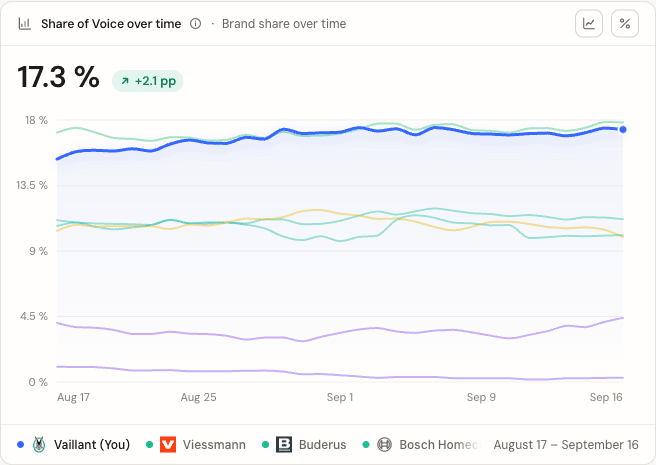
- Citation Share of Voice: the client's share of all citations for the prompt set compared with named competitors and directory domains.
- Source analysis: which competing domains are cited and for which prompts, so that content gaps become visible.
- Change over time: before-and-after comparison around the deployment of each measure.
Agency or tool: where ucited.ai fits
ucited.ai is a GEO analytics SaaS that measures and monitors how often websites are cited in LLM answers. It is not an agency and does not implement content measures for clients. Agencies use tools like ucited.ai to establish a baseline, prioritise measures and report results. Companies use them to evaluate whether an agency's work has a measurable effect on citations. The two roles are complementary: the agency changes the content, the tool measures whether AI systems respond.
Functions that ucited.ai provides for this purpose:
- AI visibility tracking across models: monitoring whether a client domain is mentioned and cited for defined prompts in ChatGPT, Gemini, Perplexity and further AI models, on a configurable schedule (daily, weekly, monthly or on demand).
- Citation Share of Voice: the client domain's share of all citations for the prompt set against a freely defined competitor set, tracked over time.
- Citation and source analysis: which sources the models cite most for the client's questions, by type and citation rate, and where the client's own domain is missing.
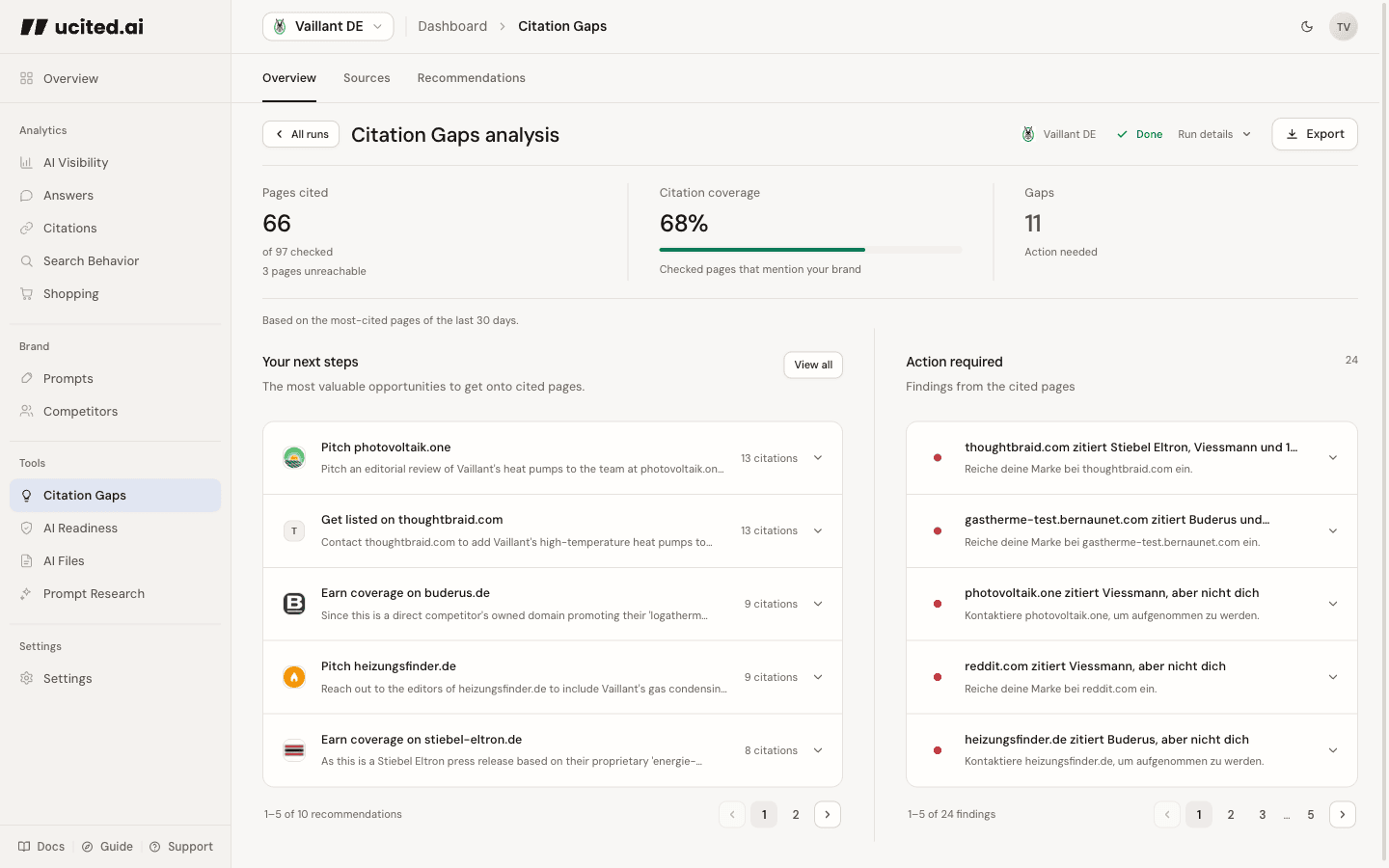
- Citation gaps and recommendations: every source gap is turned into a concrete next step; recommendations and the resulting task list can be exported as a reporting basis.
- AI-readiness assessment: technical and structural evaluation of a page's citability, including bot access and semantic parsing.
- International markets and languages: separate evaluation per client across multiple countries and languages.
- API access: connect the citation data to your own reporting and AI workflows via API keys.
Frequently asked questions
What does a GEO agency do?
A GEO agency optimises a company's content and website so that AI systems such as ChatGPT, Perplexity or Google AI Overviews cite it as a source in their answers. Typical work includes restructuring content into self-contained answer blocks, adding verifiable statistics, improving technical accessibility for AI crawlers and monitoring citation frequency.
How do I know whether a GEO agency is any good?
Ask for a measured baseline of your current AI citations, a list of the concrete measures planned, the evidence behind those measures and a reporting format that shows citation frequency per AI system over time. Providers who cannot measure AI visibility cannot prove their results.
How much does a GEO agency cost?
No verified market price data for GEO agencies in DACH has been collected. Pricing depends on whether GEO is offered as an add-on to SEO support or as a standalone project with monitoring. Evaluate offers by whether they include citation data as proof of results.
Is ucited.ai a GEO agency?
No. ucited.ai is a SaaS tool for LLM citation monitoring, Citation Share of Voice, source analysis and AI readiness. It measures AI visibility and derives concrete recommendations from the data; implementing those measures is the job of an in-house team or a specialised agency. The directory on this page is a neutral market overview.
Why do AI systems cite agency directories rather than agencies?
For questions like "Which agencies in Germany specialise in GEO?", directory and comparison domains such as geoagenturen.de, agenturtipp.de and omr.com receive the majority of citations (analysis of ucited citation data, as of September 2026). List-style pages that directly answer the comparative question match the answer format AI systems generate, which favours them over individual agency websites.